
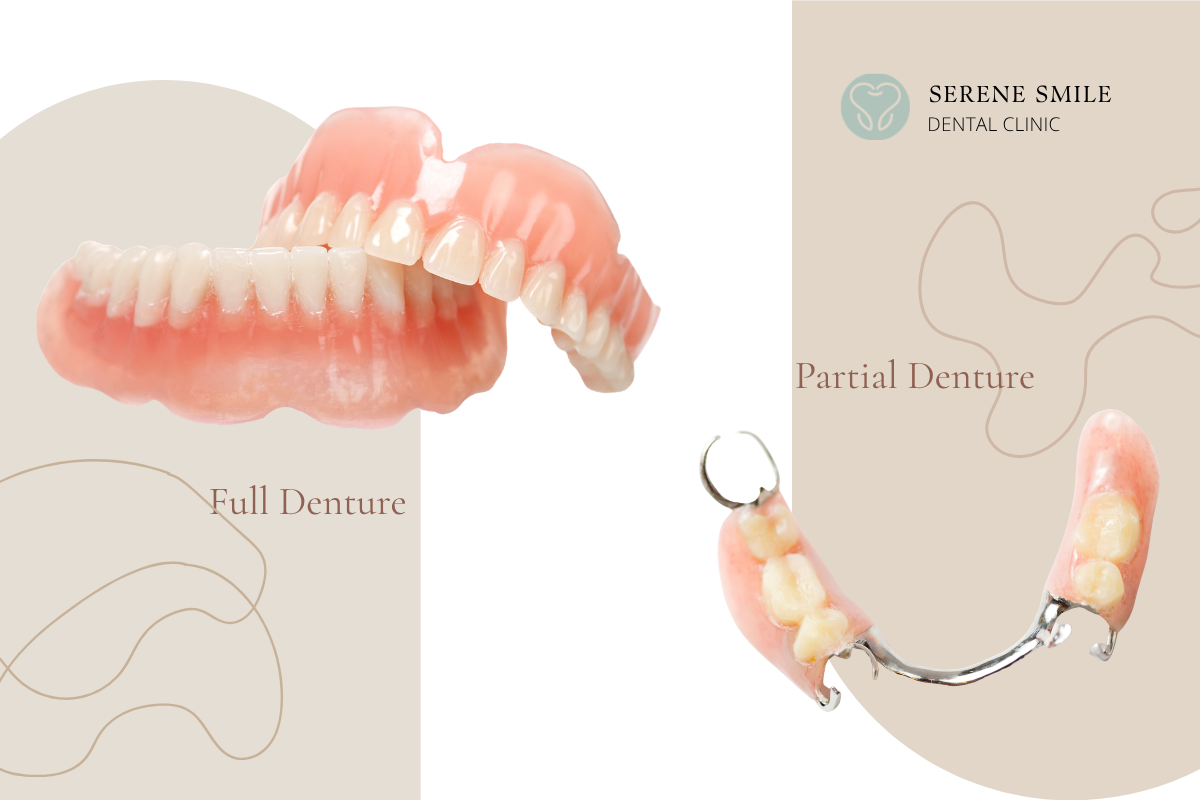
Dentures replace missing teeth with a removable appliance. At our Puchong clinic pricing works as a base cost from RM350, which varies by material, plus RM50 for each missing tooth being replaced. Full dentures replace a whole arch; partial dentures fill gaps around teeth you still have.
Key takeaways
- Pricing is a base cost from RM350 plus RM50 per missing tooth.
- The base cost is what changes with material, and it ranges up to about RM2,000.
- Partial dentures need healthy remaining teeth to hold onto, so gum health is assessed first.
- Expect several fitting appointments, not one. A denture is built in stages.
- The first two weeks are the hardest. Almost everyone adapts; almost nobody enjoys week one.
The main types
Full (complete) dentures
Replace every tooth in an upper or lower arch. Upper full dentures cover the palate, which creates suction and generally makes them more stable than lower ones. Lower full dentures sit on a horseshoe of ridge with the tongue moving beneath them, which is why they are harder to keep in place and why lower dentures generate most of the complaints.
Partial dentures
Fill one or more gaps while your remaining teeth stay in place. They clip onto those teeth with clasps or precision attachments, which means the health of the remaining teeth matters enormously — a partial denture anchored to a tooth with gum disease will loosen that tooth faster.
Immediate dentures
Made in advance and fitted the same day teeth are extracted, so you are never without teeth. The trade-off is that gums and bone shrink substantially over the following months as the sockets heal, so an immediate denture needs relining or remaking once things have settled. It is a transitional appliance by design.
Implant-retained overdentures
A denture that clips onto two or more implants rather than resting on gum alone. Considerably more stable, particularly in the lower jaw, and far more expensive. Worth knowing about if a lower full denture is the problem you are trying to solve.
How the cost works
Denture pricing at Serene Smile Dental, Puchong
| Component | Price | Basis |
|---|---|---|
| Base cost | From RM350 | per denture, varies by material |
| Each missing tooth replaced | RM50 | per tooth |
The logic is worth understanding because it makes the quote predictable. The base cost covers the framework — the part that sits against your gum and holds everything together, and the material it is made from. Each replacement tooth added to that framework is RM50.
So a small partial replacing three teeth is a base cost plus RM150. A larger partial replacing six is the same base plus RM300. A quote is itemised this way so you can see exactly what you are paying for.
Choosing the material
The base cost varies almost entirely with what the framework is made from, and there are five realistic options:
- Normal acrylic — the conventional choice. Thicker than the alternatives, easy to adjust and add to, and the most affordable.
- Flexible acrylic — thin, comfortable, no visible metal clasps. Excellent aesthetically, harder to adjust or repair.
- Cobalt-chrome (Co-Cr) — a cast metal framework, very thin and strong, transmits temperature so food tastes more natural. The clasps can show.
- PEEK — a high-performance polymer. Metal-free, light, strong, biocompatible.
- Titanium — the thinnest and lightest metal option, extremely strong and well tolerated.
They rank in roughly that order for cost, from acrylic at the bottom to titanium at the top. Which one suits you depends less on budget than on how many teeth remain, where they sit, and whether clasps would be visible when you smile.
What determines whether a denture works
Two things matter more than material, and neither is within your control once you are in the chair.
Ridge shape. A well-formed ridge of bone gives a denture something to sit on and grip. A flat, resorbed ridge — usually the result of teeth having been missing for many years — gives it almost nothing. This is the single biggest predictor of whether a lower full denture will be tolerable, and it is why leaving gaps for a decade makes the eventual solution harder.
Saliva. Upper full dentures rely on a thin film of saliva for suction. Dry mouth, which is common with many medications, substantially reduces retention.
Neither is a reason not to proceed. Both are reasons to have expectations set honestly beforehand.
The process
A denture is built across several appointments, and each stage exists for a reason:
- Assessment. Examination of remaining teeth and gums, X-rays, and a discussion of what is realistic.
- Impressions. Usually a preliminary and then a precise final impression.
- Bite registration. Recording how your jaws meet, which decides where the teeth sit.
- Wax try-in. The teeth are set in wax so you can see and approve the appearance and bite before anything is finalised. This is the appointment to speak up at.
- Fitting. The finished denture is placed and adjusted.
- Reviews. Almost every new denture needs adjusting in the first weeks. This is expected, not a sign of a bad fit.
Rushing these stages is the commonest cause of a denture that is never comfortable.
Being straightforward about adaptation: a new denture feels bulky, changes your speech for a week or two, and makes eating awkward at first. Sore spots in the first days are normal and are what the review appointments are for. Almost everyone adapts. Very few enjoy the first fortnight. Wearing it consistently, reading aloud to retrain speech, and chewing on both sides at once are what shorten it.
How dentures compare to the alternatives
Dentures are by a wide margin the most affordable way to replace multiple missing teeth, they are removable and easy to clean, and they can be added to if you lose further teeth.
What they do not do is preserve bone. A denture rests on the gum and transmits no force into the jaw, so the ridge underneath continues to resorb, which is why dentures need relining every few years and eventually remaking. Bridges and implants each address this differently — our comparison of implants versus dentures sets out the differences.
Questions worth asking before you commit
- “Which material are you recommending, and why that one for my case?” The answer should reference how many teeth you are keeping and where, not just cost.
- “Can teeth be added to this denture if I lose more?” Acrylic yes, metal frameworks and flexible acrylic usually not. This matters if any remaining teeth are compromised.
- “How many appointments, and is there a try-in stage?” A wax try-in where you approve the appearance before anything is finalised is the stage most worth insisting on.
- “What is not included?” Extractions, gum treatment, relines and future repairs are normally separate.
A clinic that answers all four specifically is planning your case. One that quotes a flat figure without reference to your mouth is quoting a product.
Looking after them
- Clean daily with a denture brush and soap or denture cleaner, never regular toothpaste, which is abrasive.
- Clean over a basin of water so a drop does not fracture them.
- Take them out at night unless told otherwise, and store them in water so they do not dry and warp.
- Clean your gums, tongue and any remaining teeth separately.
- Keep attending check-ups. Your mouth changes underneath even when the denture does not.
- Never attempt a DIY repair with glue. Bring it in.
Dentures in Puchong
Whether a denture is the right answer depends on how many teeth are missing, the condition of the ones remaining, and your ridge. We are in Puchong South, near Bandar Puteri, Bandar Kinrara and Puchong Jaya.
Considering dentures?
Book an assessment in Puchong. We will tell you what is realistic for your situation, and quote it properly.
Frequently asked questions
How much do dentures cost in Puchong?
Pricing is a base cost from RM350, which varies by material up to around RM2,000, plus RM50 for each missing tooth being replaced. Any extractions or gum treatment needed beforehand is quoted separately.
What is the difference between full and partial dentures?
A full denture replaces every tooth in an upper or lower arch. A partial denture fills one or more gaps while your remaining teeth stay in place, clipping onto them with clasps or precision attachments.
How many appointments does a denture take?
Several. Assessment, impressions, bite registration, a wax try-in where you approve the appearance before anything is finalised, fitting, and review appointments for adjustments. Rushing these stages is the commonest cause of an uncomfortable denture.
Why are lower dentures harder to wear than upper ones?
Upper dentures cover the palate, which creates suction. Lower dentures sit on a horseshoe of ridge with the tongue moving beneath them, so there is far less to hold them in place.
What is an immediate denture?
One made in advance and fitted the same day teeth are extracted, so you are never without teeth. Gums and bone shrink as the sockets heal, so it needs relining or remaking once things settle. It is transitional by design.
Do dentures need replacing?
Yes. A denture rests on the gum and transmits no force into the jaw, so the ridge underneath continues to resorb. Dentures typically need relining every few years and eventually remaking.
How should I clean my dentures?
Daily with a denture brush and soap or denture cleaner, never regular toothpaste which is abrasive. Clean over a basin of water, take them out at night unless told otherwise, and store them in water so they do not dry and warp.

This article is for general information and does not replace an in-person dental examination. Treatment options and costs depend on your individual condition and can only be confirmed after a clinical assessment.