Most people adapt to a new denture within two to four weeks. Speech usually corrects within a week, eating takes longer, and sore spots in the first days are normal and adjusted at review appointments. The lower denture takes longest to get used to.
What the first weeks are actually like
Being honest about this saves a great deal of unnecessary worry. A new denture feels enormous. Your tongue will not leave it alone. You will produce more saliva than usual, your speech will change, and eating anything more demanding than soup will feel like a project.
All of that is normal, all of it is temporary, and knowing it in advance is genuinely the difference between persevering and giving up in week one. The mouth is exceptionally sensitive to change and equally good at adapting to it — but adaptation takes weeks, not days.
Week one
Wear it
The most useful thing you can do is keep it in, apart from cleaning. Every hour of wear trains your tongue, cheeks and lips to accommodate it. Taking it out whenever it feels awkward restarts that process each time and is the single commonest reason people never adapt.
Expect sore spots
Almost every new denture rubs somewhere. A denture is made to a model of your mouth, and the mouth under load behaves slightly differently to the model. One or two pressure points are expected.
Do not attempt to file it yourself. Bring it in and we adjust it in minutes. If a spot is genuinely painful, leave the denture out until your appointment, but put it back in for a few hours before you come — the sore area needs to be visible for us to know precisely where to adjust.
Extra saliva
Your salivary glands treat a new denture as food and respond accordingly. It settles within a few days. Swallowing more often than usual helps in the meantime.
Getting your speech back
Most people sound different for the first week, particularly on s, f, v and th sounds, and a slight lisp is common. It resolves as the tongue learns where the new surfaces are.
What speeds it up:
- Read aloud for ten minutes twice a day. Anything will do. This is the single most effective thing, and it is why some people adapt in three days and others in three weeks.
- Practise the sounds you are struggling with deliberately.
- Speak more slowly at first rather than avoiding conversation.
If speech has not normalised after two to three weeks, tell us. Occasionally the teeth are set slightly too far forward or the palate is thicker than it needs to be, and both are adjustable.
Learning to eat again
This takes longer than speech and follows a fairly reliable progression.
Days 1–3: soft food, cut small
Scrambled egg, fish, well-cooked vegetables, porridge, soft noodles. Cut everything smaller than you think necessary.
Days 4–10: chew on both sides
This is the technique that matters most and it is counterintuitive. Natural teeth let you chew on one side. A denture pivots and lifts if you do that. Put food on both sides and chew simultaneously to balance it. Practising this deliberately is what separates people who eat comfortably from people who never quite manage.
Week 2 onwards: gradually harder textures
Add firmer foods one at a time. Bite with the side teeth rather than the front, particularly with a full upper denture — biting into an apple with the front teeth levers the back of the denture down.
What stays difficult
Some things remain genuinely hard with a full denture: whole apples, corn on the cob, tough steak, very sticky sweets, nuts and seeds that lodge underneath. Cutting them up usually solves it. Chewing efficiency with a full denture is around 20 to 40 per cent of natural teeth, and no amount of practice changes that.
Lower dentures are harder, and it is not you. An upper denture covers the palate and gains suction. A lower sits on a horseshoe of ridge with the tongue moving underneath it, so there is far less holding it down. If your lower denture moves while your upper is fine, that is anatomy rather than a fault. Where it remains a problem, two implants to clip it onto solve it decisively.
Denture adhesive: when it helps and when it hides a problem
Adhesive can be genuinely useful, particularly for lower dentures and flat ridges, and there is no reason to feel it represents failure.
But it should supplement a denture that already fits, not compensate for one that does not. If you find yourself needing progressively more of it, that usually means the ridge has resorbed and the denture needs relining. Adhesive masking a poor fit lets pressure concentrate in the wrong places and accelerates bone loss underneath.
Use a thin layer in small dots on a clean, slightly damp denture. More adhesive does not work better; it works worse.
Daily care
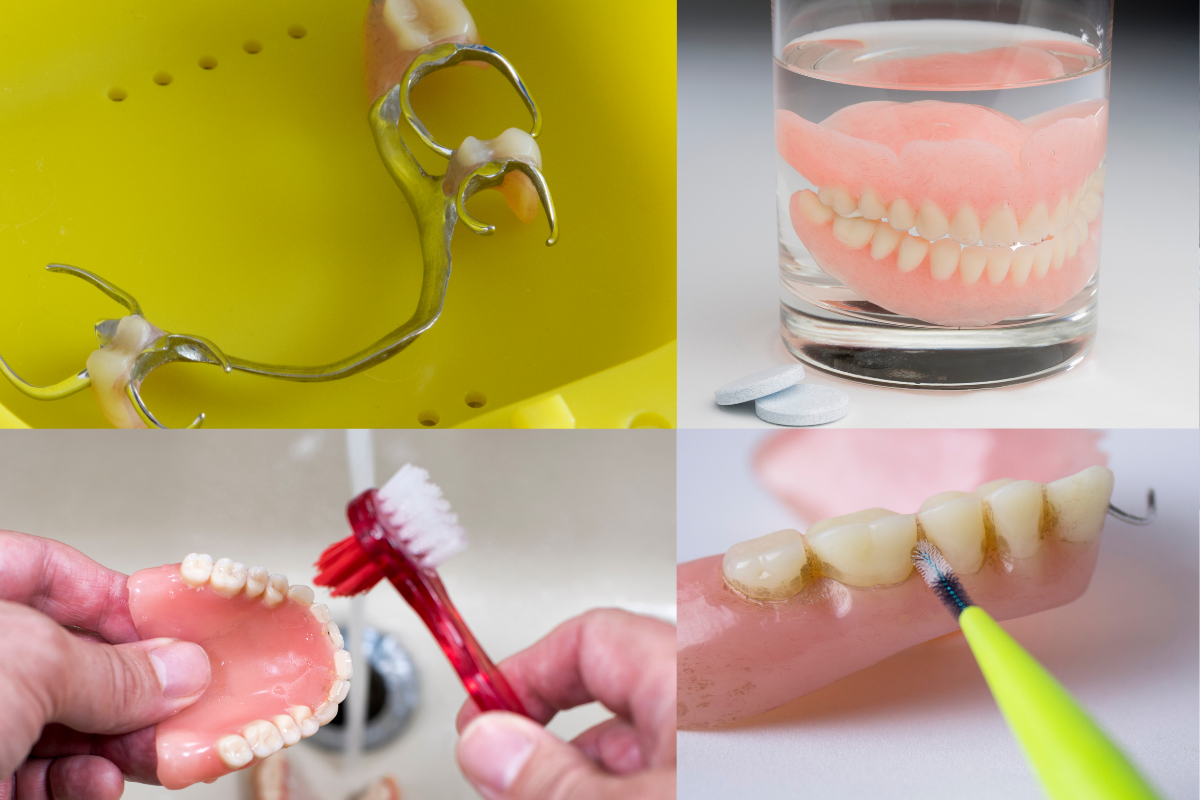
- Clean after meals where you can, and thoroughly once a day with a denture brush and soap or denture cleaner — never regular toothpaste, which is abrasive enough to scratch the surface.
- Clean over a basin of water or a folded towel. Most fractured dentures were dropped on a hard sink.
- Take it out at night unless specifically advised otherwise, and store it in water. Gum tissue needs time uncovered, and a dry denture warps.
- Brush your gums, tongue and palate morning and night, and any remaining teeth as normal.
- Rinse your mouth after removing it.
When to come back
Contact the clinic if you have a sore spot that has not settled in a few days, a denture that has become noticeably looser, difficulty eating that is not improving after a month, speech still affected after three weeks, a cracked denture or broken clasp, or any white patches or persistent soreness of the gum underneath.
Keep attending check-ups even without teeth. The tissues underneath still need examining, and denture wearers still need oral cancer screening.
How long adaptation really takes
Most people are broadly comfortable within two to four weeks. First-time denture wearers take longer than those replacing an old one, and lower dentures take longer than upper. If you are three months in and still struggling, that is not simply a matter of persevering — something is adjustable and worth investigating.
Our guide to dentures in Puchong covers the types and process, and the cost guide explains how pricing works.
Support in Puchong
Adjustments in the first weeks are part of the process, not an inconvenience. We are in Puchong South, near Bandar Puteri, Bandar Kinrara and Puchong Jaya. More about our general dentistry services.
New denture rubbing?
Book an adjustment in Puchong. Sore spots take minutes to fix and there is no reason to put up with them.
Frequently asked questions
How long does it take to get used to new dentures?
Most people are broadly comfortable within two to four weeks. Speech usually corrects within a week, eating takes longer. First-time wearers take longer than those replacing an old denture, and lower dentures take longest.
Why does my new denture make me lisp?
Your tongue has to relearn where the new surfaces are, particularly for s, f, v and th sounds. Reading aloud for ten minutes twice a day is the single most effective way to speed it up. It normally resolves within a week.
How should I eat with a new denture?
Start with soft food cut small for the first few days. Then learn to chew on both sides at once rather than one side, because a denture pivots and lifts if you chew unilaterally. Add firmer textures one at a time from week two.
Are sore spots normal with a new denture?
Yes. Almost every new denture rubs somewhere, because the mouth under load behaves slightly differently to the model it was made on. Do not file it yourself. Adjustments take minutes at a review appointment.
Should I use denture adhesive?
It can genuinely help, particularly with lower dentures and flat ridges. But it should supplement a denture that already fits, not compensate for one that does not. Needing progressively more usually means it needs relining.
Should I sleep with my dentures in?
No, unless specifically advised otherwise. Gum tissue needs time uncovered, and wearing them overnight raises the risk of fungal infection. Store the denture in water so it does not dry out and warp.
Why is my lower denture harder to wear than my upper?
An upper denture covers the palate and gains suction. A lower sits on a horseshoe of ridge with the tongue moving underneath, so there is far less holding it in place. That is anatomy rather than a fault with the denture.

This article is for general information and does not replace an in-person dental examination. Treatment options and costs depend on your individual condition and can only be confirmed after a clinical assessment.