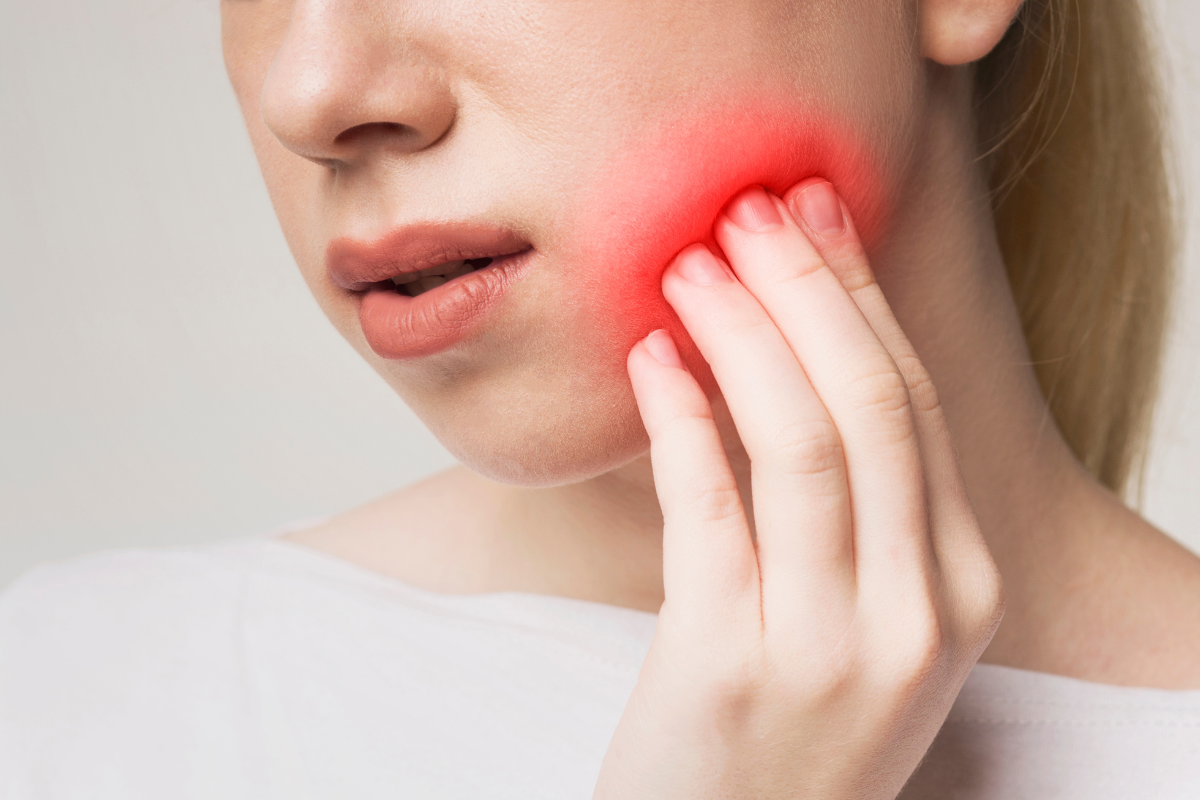
Toothache genuinely does get worse at night. Lying flat increases blood pressure in the head, which raises pressure inside an inflamed tooth, and with no distractions the pain feels more intense. Sleeping propped up and taking a painkiller before bed both help, but neither treats the cause.
Why night is worse — and it is not your imagination
Three separate things combine, which is why the effect is so pronounced.
Lying flat raises pressure inside the tooth
This is the main mechanism. When you lie down, blood flow to the head increases and venous drainage slows. A tooth with an inflamed nerve is a problem of pressure: the nerve sits inside a rigid chamber of dentine with nowhere to expand. Increase the blood pressure inside that chamber and the pain rises with it. It is the same reason a throbbing tooth eases when you stand up.
Nothing else is competing for your attention
Pain perception is genuinely affected by what else the brain is processing. During the day, work, conversation and movement all compete. At 2am there is nothing but the tooth, and it occupies the whole field.
Your painkiller has worn off
Most people take something in the evening and it wears off in the small hours, at precisely the point the pressure effect is strongest.
What is actually causing it
Night-time throbbing usually points to one of a small number of things, and they differ in urgency:
- Irreversible pulpitis. Decay or a crack has reached the nerve and the inflammation cannot resolve. The signature is pain that lingers well after cold or heat is removed, spontaneous throbbing, and pain on lying down. This is the classic night toothache, and the tooth needs root canal treatment or extraction.
- A dental abscess. The nerve has died and infection has spread to the tip of the root. Tender to bite on, sometimes with swelling and a bad taste.
- A cracked tooth. Sharp pain on releasing a bite, often intermittent for months before it becomes constant.
- Pericoronitis. Infection of the gum flap over a partly erupted wisdom tooth, usually with soreness at the back of the jaw.
- Grinding. Ache on waking rather than pain that wakes you, often with jaw tightness and headache.
- Sinus pressure. Several upper back teeth aching together, worse when bending forward, alongside congestion.
Only the last two are likely to settle on their own. Our guide to root canal warning signs covers the nerve-related ones in more detail.
Getting through the night
These measures buy time. None of them treats what is wrong.
- Sleep propped up on two or three pillows, or in an armchair. This is the most effective single thing, because it directly addresses the pressure mechanism.
- Take a painkiller before bed, following the packet instructions, rather than waiting for the pain to wake you.
- Cold compress on the outside of the cheek, 15 minutes on and 15 off.
- Rinse with warm salt water if food is trapped or the gum is sore.
- Avoid the triggers — very hot, very cold, sweet, and chewing on that side.
- Keep the area clean. Brush gently rather than avoiding it; trapped debris makes things worse.
Never place aspirin or a painkiller tablet against the gum. It does nothing for the tooth, because painkillers work through the bloodstream, and it produces a chemical burn on the gum tissue that then needs its own healing time. Clove oil applied undiluted causes similar damage. If you use clove oil at all, it must be diluted and applied only to the tooth.
What does not work
- Heat on the cheek. Increases blood flow to an area where the problem is already pressure.
- Antibiotics you have at home. They do not resolve pulpitis, and incomplete courses drive resistance. Antibiotics have a role in spreading infection, prescribed properly.
- Waiting it out. Once the nerve is irreversibly inflamed, it will not recover.
- Alcohol. It interacts with painkillers, disturbs sleep, and does not help.
When to be seen urgently rather than booking
Call the same day, or go to hospital, if you have facial swelling, particularly around the eye or under the jaw; difficulty swallowing, breathing or opening your mouth; fever alongside the toothache; or pain that ordinary painkillers are not touching at all.
Spreading dental infections are the one genuinely dangerous scenario here, and they are time-sensitive. Our guide to dental emergencies in Puchong sets out what warrants which response.
The trap: when the pain stops
Severe toothache that disappears over a day or two feels like recovery. It usually is not.
What has generally happened is that the nerve has died. The source of the pain is gone because the tissue producing it is dead — but the bacteria are still there, and they now have an unobstructed route to the tip of the root and the bone beyond. The next event is typically an abscess, and it is considerably more uncomfortable than what preceded it.
If severe pain resolves on its own, book an appointment. That is the window in which the tooth is still straightforward to treat.
What treatment involves
It depends entirely on the cause, which is why an examination and an X-ray come first. Decay reaching the nerve means root canal treatment or extraction. An abscess needs the infection drained and the source addressed. A crack may need a crown or, if it extends into the root, extraction.
What matters is that all of these are far more straightforward when dealt with early. Prevention is the cheaper route entirely, and our guide to protecting teeth from decay covers it.
Toothache in Puchong
If a tooth has kept you awake, call us. We keep time available for urgent cases. We are in Puchong South, near Bandar Puteri, Bandar Kinrara and Puchong Jaya.
Kept awake by toothache?
Call or WhatsApp us in Puchong. Night pain rarely settles on its own, and it is easier to treat early.
Frequently asked questions
Why is toothache worse at night?
Lying flat increases blood flow to the head and slows drainage, which raises pressure inside an inflamed tooth. There are also no distractions competing for attention, and evening painkillers have usually worn off by the small hours.
How can I stop toothache at night?
Sleep propped up on two or three pillows, take a painkiller before bed rather than waiting for pain to wake you, use a cold compress on the outside of the cheek, and rinse with warm salt water. These buy time but do not treat the cause.
Can I put aspirin on my tooth?
No. Painkillers work through the bloodstream, so placing a tablet against the gum does nothing for the tooth and causes a chemical burn that then needs its own healing time. Undiluted clove oil causes similar damage.
What does throbbing toothache at night mean?
Most often that decay or a crack has reached the nerve and the inflammation cannot resolve. Pain lingering after cold or heat, spontaneous throbbing and pain on lying down together point to a tooth needing root canal treatment or extraction.
My toothache stopped. Is it better?
Usually not. Severe pain that disappears often means the nerve has died. The bacteria remain and now have a route to the root tip and bone, and the next event is typically an abscess. Book an appointment.
When is toothache an emergency?
If you have facial swelling, difficulty swallowing, breathing or opening your mouth, fever alongside the pain, or pain that ordinary painkillers are not touching at all. Spreading dental infections are time-sensitive.

This article is for general information and does not replace an in-person dental examination. Treatment options and costs depend on your individual condition and can only be confirmed after a clinical assessment.