Bleeding gums are almost always caused by plaque at the gum line, not by brushing too hard. Healthy gums do not bleed. If yours bleed for more than two weeks despite cleaning them properly, that is the point to have them examined.
The belief worth correcting first
Most people who notice blood when they brush conclude one of two things: they brushed too hard, or their gums are just naturally sensitive. Both explanations are reassuring and both are usually wrong.
Healthy gum tissue does not bleed when a toothbrush passes over it. It does not bleed when floss goes between teeth. Bleeding means the tissue is inflamed, and inflamed tissue is fragile enough to break under contact that intact tissue tolerates easily.
The useful way to think about it: the bleeding is not the injury, it is the symptom. Something is inflaming the gum, and in the overwhelming majority of cases that something is plaque sitting at the gum line.
Why plaque causes it
Plaque is a soft film of bacteria that forms within hours of brushing. Where it sits at the junction of tooth and gum, the immune system responds to it with inflammation — increased blood flow, swelling, and vessels close to a surface that becomes easy to breach.
Left in place for a day or two, plaque hardens into calculus, which is rough and porous and holds fresh plaque tightly against the gum. At that point the irritation becomes continuous and you cannot remove it yourself, however well you brush.
That is the mechanism behind the paradox people report: they start brushing more carefully, the bleeding continues, so they conclude brushing is the cause. In fact the calculus that is driving it is now beyond the reach of a toothbrush.
The other causes worth knowing
- Starting to floss after a long gap. Gums that have been inflamed for months will bleed for the first several days of proper flossing, then stop. This is the one situation where bleeding is temporary and expected.
- Pregnancy. Hormonal changes make gums considerably more reactive to the same amount of plaque. Pregnancy gingivitis is common and settles after birth, but it should still be managed rather than ignored.
- Medications. Blood thinners make any bleeding heavier and more persistent. Some drugs cause gum overgrowth, creating pockets that trap plaque.
- Vitamin deficiency, particularly vitamin C, though this is uncommon in a normal diet.
- Diabetes, especially when poorly controlled.
- A poorly fitting restoration. A filling or crown with an overhanging margin creates a permanent plaque trap, and the gum next to it bleeds while the rest of the mouth is fine.
- Aggressive brushing technique — a genuine but much less common cause. It typically causes recession rather than bleeding, and shows as a wedge-shaped notch at the gum line.
- Systemic conditions, including blood disorders. Rare, but part of why persistent unexplained bleeding should be assessed rather than assumed.
The smoking trap
This one is worth its own paragraph because it works in the opposite direction to what you would expect.
Nicotine constricts blood vessels, including those in the gums. Smokers therefore bleed less than non-smokers with the same amount of disease — sometimes not at all. The most reliable warning sign is suppressed while the underlying process continues, which is a major reason smokers tend to present with more advanced periodontitis.
If you smoke and your gums do not bleed, that is not evidence they are healthy. It is a reason to have them measured.
The two-week test
If your gums bleed and you want to know whether it is a cleaning problem or something more, this is a reasonable thing to try first:
- Brush twice daily for a full two minutes with a soft brush, angling the bristles into the gum line at about 45 degrees rather than scrubbing across the teeth.
- Clean between every tooth once a day, with floss or interdental brushes.
- Keep going even though it bleeds. This is the part people abandon. Avoiding a bleeding area leaves plaque there and guarantees it continues.
- Give it two weeks.
If the bleeding stops, it was gingivitis and you have resolved it. Keep doing exactly that.
If it has not stopped after two weeks, book an appointment. Persisting bleeding despite good home care means there is calculus below the gum line that you cannot reach, or something else going on. More cleaning at home will not fix it.
Do not stop cleaning a bleeding area. It is the most common and most counterproductive response. The gum bleeds because it is inflamed by plaque; leaving the plaque there keeps it inflamed. Gentle, consistent cleaning of the exact area that bleeds is what settles it.
Why bleeding gums are worth taking seriously
At the gingivitis stage, this is entirely reversible. The gum is inflamed, no bone has been lost, and thorough cleaning resolves it completely with no lasting consequence.
Left long enough, inflammation extends below the gum and starts destroying the attachment and bone that hold teeth in place. That transition is permanent. Bleeding gums are the last warning you get while the problem is still fully fixable, which is exactly why they are worth acting on rather than explaining away. Our guide to gum disease in Puchong covers the stages and what happens at each.
What an assessment involves
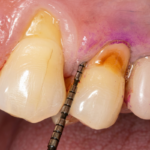
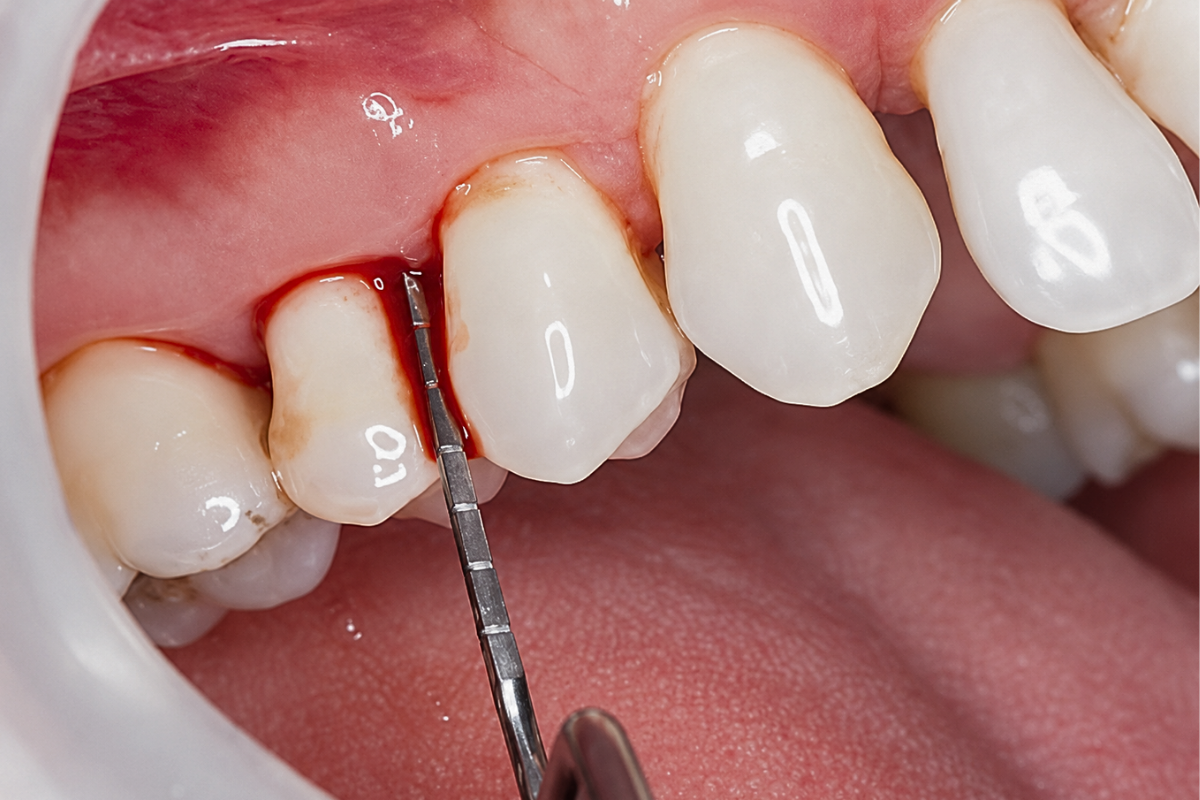
Not a glance at your gums. We measure the depth of the crevice at six points around every tooth with a calibrated probe, and record which sites bleed on probing. Those numbers separate gingivitis, where pockets remain 1 to 3 mm, from periodontitis, where they have deepened past 4 mm and attachment has been lost.
X-rays show the bone level directly. Together, the chart and the X-rays tell us whether cleaning and better technique will resolve this, or whether treatment below the gum line is needed.
Getting it looked at in Puchong
If your gums have been bleeding for more than a couple of weeks, have them measured rather than guessing. We are in Puchong South, close to Bandar Puteri, Bandar Kinrara and Puchong Jaya. More about our gum treatment services.
Still bleeding after two weeks?
Book an assessment in Puchong. You will leave knowing your actual pocket depths, not an impression.
Frequently asked questions
Why are my gums bleeding when I brush?
Almost always because plaque at the gum line is inflaming the tissue. Healthy gums do not bleed when brushed. Once plaque hardens into calculus below the gum line, brushing alone cannot remove it.
Am I brushing too hard?
Rarely the cause. Aggressive brushing typically produces gum recession and wedge-shaped notches at the gum line rather than bleeding. Bleeding points to inflammation from plaque.
Should I stop brushing where my gums bleed?
No. That is the most common and most counterproductive response. The gum bleeds because plaque is inflaming it, so leaving the plaque there keeps it inflamed. Clean the area gently and consistently.
How long should bleeding gums take to settle?
With proper brushing and daily cleaning between teeth, gingivitis usually settles within two weeks. If bleeding persists beyond that despite good home care, there is calculus below the gum line you cannot reach.
Is it normal for gums to bleed when I start flossing?
Yes, if the gums were already inflamed. Bleeding for the first several days of proper flossing is expected and then stops. Persisting beyond about two weeks is not.
Why do my gums not bleed even though I smoke?
Nicotine constricts the blood vessels in the gums, so smokers bleed less than non-smokers with the same amount of disease. The absence of bleeding is not evidence of health, and is a reason to have pocket depths measured.

This article is for general information and does not replace an in-person dental examination. Treatment options and costs depend on your individual condition and can only be confirmed after a clinical assessment.