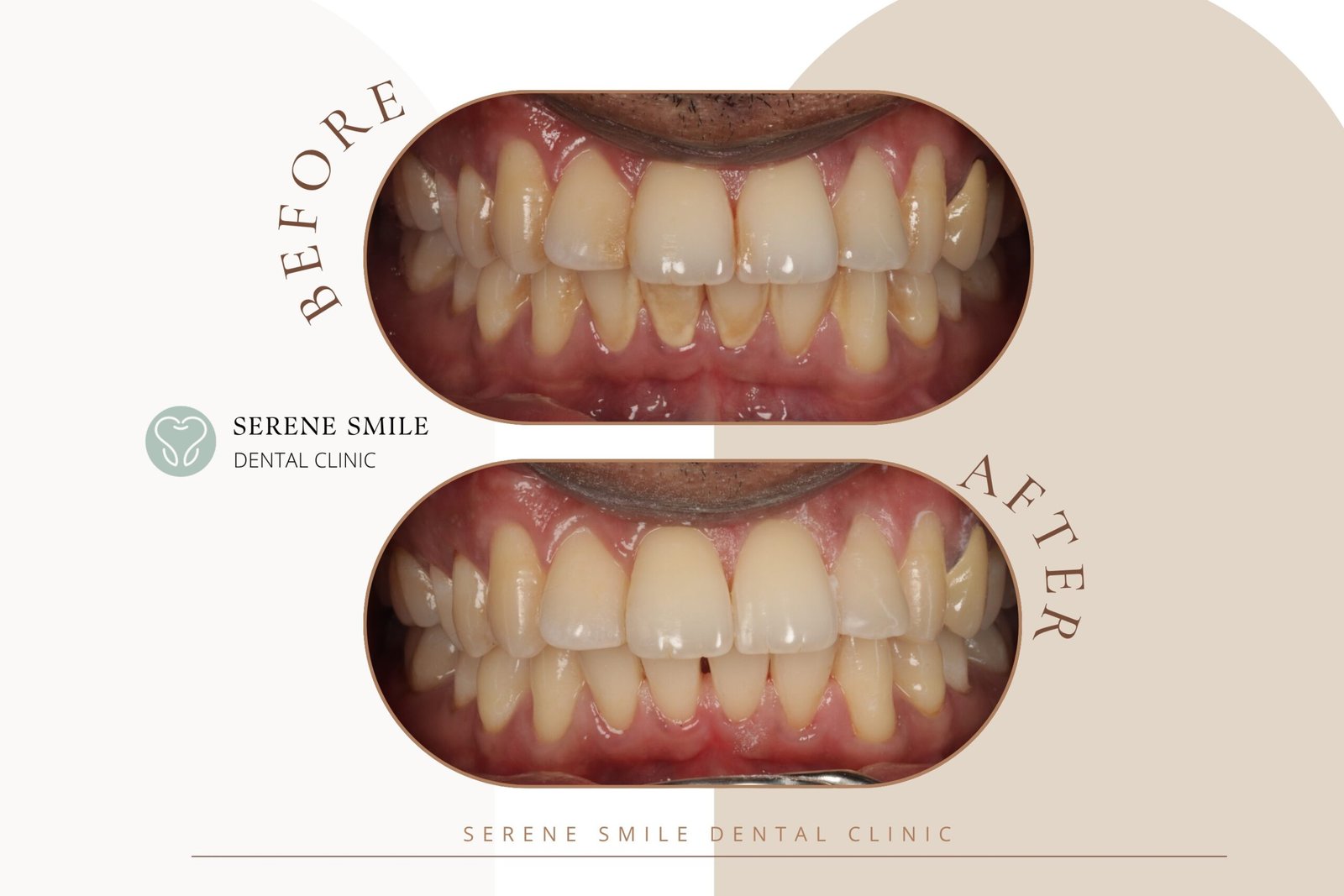
Scaling removes the hardened deposits that brushing cannot shift; polishing then smooths and cleans the tooth surface so plaque takes longer to build back up. Most adults need the two done together every six months, and the appointment takes about 30 to 45 minutes.
Key takeaways
- Scaling and polishing are two different steps in the same appointment, not two names for the same thing.
- Once plaque hardens into calculus, no toothbrush, mouthwash or whitening toothpaste will remove it.
- Six months suits most people; smokers, diabetics and anyone with gum disease usually need three to four.
- Bleeding during the appointment is a sign of inflamed gums, not of the cleaning being too aggressive.
- Skipping cleanings does not save money — it converts a routine appointment into gum treatment later.
What scaling and polishing actually are
Plaque is the soft, colourless film of bacteria that forms on your teeth within hours of brushing. While it stays soft you can remove it yourself. But saliva contains minerals, and within a couple of days those minerals turn plaque into calculus — also called tartar — which bonds to the tooth surface like limescale bonds to a kettle.
That is the point at which brushing stops working. Calculus is porous and rough, so it holds more plaque against the gum, which inflames the gum, which makes it bleed and pull away from the tooth. Scaling breaks that cycle by removing the calculus mechanically, usually with an ultrasonic instrument that vibrates the deposits off while water cools the tip.
Polishing comes after. A soft rubber cup and a fine paste remove surface stains from coffee, tea, teh tarik and smoking, and leave the enamel smoother than it was. That smoothness matters more than the shine: plaque takes noticeably longer to re-establish on a polished surface.
Why brushing well is not enough
This is the single most common misunderstanding we hear. Patients who brush twice a day, floss, and use mouthwash are genuinely surprised to be told they have calculus. But good brushing does not prevent calculus everywhere — it prevents it in the places your brush actually reaches.
The deposits almost always build up in the same two areas: the inner surface of the lower front teeth, and the outer surface of the upper back molars. Both sit directly opposite a salivary gland opening, so they are bathed in the minerals that harden plaque. Even meticulous brushers accumulate calculus there.
There is a second reason. Once calculus forms below the gum line, it is physically out of reach of any home care. Removing it requires instruments and, crucially, someone who can see and feel where it is. Our page on why frequent dental cleanings matter goes into what this prevents over time.
The appointment, step by step
Examination first
We check the gums before touching anything. Where they bleed, how deep the pockets around each tooth are, and whether there is any bone loss all change what the cleaning needs to be. A routine scale and polish assumes healthy or mildly inflamed gums; if we find established gum disease, the correct treatment is different and we will tell you before starting rather than afterwards.
Scaling
An ultrasonic tip removes the bulk of the deposits, with water spray keeping the tooth cool. Hand instruments then clean up the areas the ultrasonic cannot reach precisely — particularly just under the gum margin and between the teeth. You will feel vibration and cold water. Sensitivity varies enormously between patients and between teeth.
Polishing
A rubber cup and prophylaxis paste remove residual stain and smooth the surface. This is the part most people find satisfying, and it takes only a few minutes.
Flossing and advice
We finish by flossing through the contacts and pointing out the specific areas you are missing at home. This is worth paying attention to — it is usually two or three particular surfaces, not your technique in general.
Does it hurt?
For most people, no. It is unfamiliar rather than painful: vibration, water, and pressure. Where it does become uncomfortable is when gums are already inflamed, because inflamed tissue is tender before any instrument touches it. That discomfort tends to disappear once the gums settle after a cleaning or two.
If your teeth are sensitive to cold, tell us at the start. We can work in shorter passes, adjust the water temperature, and use a desensitising agent at the end. Local anaesthesia is available if you want it, though it is rarely necessary for a routine scale and polish.
Some bleeding during the appointment is normal and expected if your gums are inflamed. It is a symptom of the problem, not of the cleaning.
How often do you actually need it?
Every six months is the right interval for most adults. But it is a default, not a rule, and there are good reasons to shorten it:
- Smoking — reduces blood flow to the gums, which masks bleeding and lets disease progress silently.
- Diabetes — gum disease and blood sugar control worsen each other in both directions.
- Existing gum disease — three-monthly maintenance is standard once pockets have formed.
- Braces or fixed retainers — far more surfaces for plaque to hide against.
- Heavy calculus formation — some people simply build deposits faster, and that is largely genetic.
Equally, a small number of patients with excellent home care and healthy gums do fine on an annual visit. The honest answer is that the right interval is the one that keeps your gums from bleeding, and that is something we assess rather than assume.
One thing worth knowing: if you have not had a cleaning in several years, do not expect one appointment to fix everything. Heavy calculus is often removed across two visits, partly for comfort and partly because the gums shrink and tighten between appointments, revealing deposits that were hidden the first time.
What affects the cost of a scale and polish
The price of a cleaning in Puchong varies with what the appointment actually involves:
- How much calculus there is. Six months of light deposits and five years of heavy build-up are not the same procedure.
- Whether the deposits are above or below the gum. Subgingival cleaning takes longer and requires more care.
- Whether one visit is enough or the work is better split across two.
- Whether your gums are healthy. If we find established periodontal disease, the correct treatment is root planing rather than a routine scale and polish, and that is quoted separately.
We confirm the fee after looking at your gums, before any treatment starts. If you would like the figure in advance, call the clinic and we will tell you what a standard scale and polish costs and what would change it.
Booking a cleaning in Puchong
If your gums bleed when you brush, if you can see or feel rough deposits behind your lower front teeth, or if you simply cannot remember your last cleaning, that is the point to book one. Our clinic is in Puchong South, within easy reach of Bandar Puteri, Bandar Kinrara and Puchong Jaya. You can read more about our clinic in Puchong and the rest of our general dentistry services.
Due for a cleaning?
Book a scale and polish in Puchong. We will check your gums first and tell you exactly what is needed.
Frequently asked questions
How often should I get scaling and polishing?
Every six months suits most adults. Smokers, people with diabetes, anyone with existing gum disease and patients wearing braces usually need it every three to four months. Your dentist sets the interval based on how your gums respond.
Does scaling and polishing hurt?
For most people it is unfamiliar rather than painful — vibration, cold water and pressure. It can be tender if your gums are already inflamed. Tell us if your teeth are sensitive and we can adjust the technique or use a desensitising agent.
Will scaling damage or loosen my teeth?
No. Scaling removes deposits from the tooth surface, not the tooth itself. Teeth can feel slightly different afterwards because heavy calculus that was splinting them together has been removed, but the cleaning is what protects them long term.
Why do my gums bleed during a cleaning?
Bleeding means the gums are inflamed by plaque and calculus. It is a sign of the existing problem, not of the cleaning being too rough. Bleeding usually settles within a week or two once the deposits are removed and home care improves.
Can I just brush harder instead of getting a cleaning?
No. Once plaque hardens into calculus it bonds to the tooth and cannot be removed by any toothbrush, mouthwash or whitening toothpaste. Brushing harder wears enamel and irritates gums without removing the deposit.
Does scaling whiten teeth?
It removes surface staining from coffee, tea and smoking, so teeth often look noticeably brighter afterwards. It does not change the underlying colour of the tooth — that requires whitening treatment.

This article is for general information and does not replace an in-person dental examination. Treatment options and costs depend on your individual condition and can only be confirmed after a clinical assessment.