A dental check-up is a full examination of your teeth, gums, bite and soft tissues, usually with X-rays if you have not had them recently. It takes 20 to 30 minutes and ends with a written treatment plan. Most adults need one every six months.
Key takeaways
- A check-up is an examination, not a cleaning. The two are often booked together but they are separate procedures.
- We check the gums, the bite and the soft tissues, not only the teeth.
- X-rays show what the eye cannot: decay between teeth, bone levels and infection at the root.
- You leave with a plan that separates what needs doing now from what can be monitored.
- Most problems found at a check-up are painless. Waiting for pain is what turns a filling into a root canal.
What a dental check-up actually includes
A proper examination covers four things, and only one of them is the teeth.
- The teeth — decay, cracks, wear, and the condition of every existing filling or crown.
- The gums — bleeding, recession, and the depth of the pockets around each tooth, which is what tells us whether gum disease is present and how far it has gone.
- The bite — how your teeth meet, whether you are grinding, and whether wear patterns point to a problem that will get expensive if ignored.
- The soft tissues — tongue, cheeks, palate and the floor of the mouth. This is a screening step, and it matters.
If someone looks only at your teeth and tells you everything is fine, that was not a full examination.
The examination, step by step
History and concerns
We start by asking what has changed since your last visit, whether anything is sensitive or painful, and about your general health. Medical conditions and medications genuinely affect dental treatment — diabetes changes how gums heal, blood thinners change how we approach extractions, and dry mouth from common medications dramatically increases decay risk.
Visual and tactile examination
Tooth by tooth, with a mirror and probe, checking surfaces, margins of existing restorations, and any areas of demineralisation. Early decay often looks like a small chalky white patch rather than a hole, and at that stage it can sometimes be reversed rather than filled.
Gum assessment
We measure the depth of the crevice around the teeth. Healthy is one to three millimetres. Deeper than four means the attachment has been lost and the problem is periodontal rather than just inflammation. This is the part of the examination most likely to change your treatment plan.
Intraoral photographs
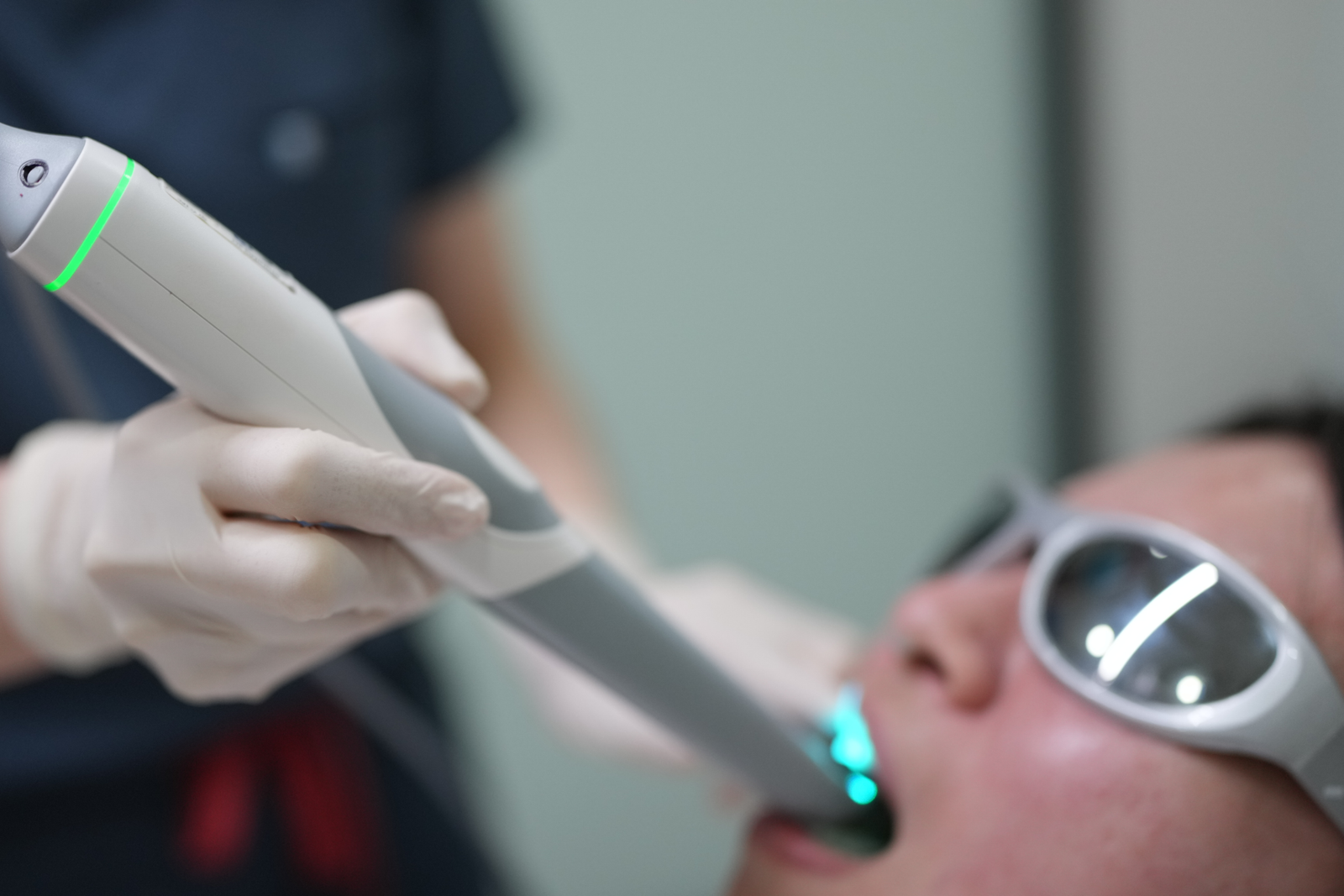
Where something needs explaining, it is far easier to show you a photograph of the tooth on screen than to describe it. It also gives us a baseline to compare against at your next visit.
X-rays: when they are needed and why
Roughly a third of decay starts between the teeth, where neither you nor we can see it. By the time it becomes visible from the biting surface it has usually undermined a large volume of dentine underneath. Bitewing X-rays catch it while it is still small.
X-rays also show bone levels around the teeth, infection at the root tips, unerupted or impacted teeth, and problems under existing crowns and fillings. Modern digital sensors use a very low dose — considerably less than a long-haul flight’s worth of background radiation.
How often depends on your risk. Someone with no decay history and healthy gums may need them every two to three years. Someone with active decay or gum disease needs them more frequently. We will always explain why before taking any.
What happens after the examination
You should leave knowing three things: what is wrong, what needs doing, and in what order. We write it down, and we separate it deliberately:
- Needs treatment now — active decay, infection, or a tooth at risk of fracturing.
- Should be planned — an old restoration that is not failing yet but will, or gum treatment that should start soon.
- Monitor — early lesions that may not progress, or wear that we photograph and compare next visit.
That third category matters. Not everything found at a check-up needs treating, and a dentist who proposes work on every finding is not necessarily doing you a service.
Why the timing matters more than people think: almost everything we find at a routine check-up is painless. Decay only hurts once it reaches the nerve, and gum disease is famously silent until teeth loosen. A tooth caught early needs a filling. The same tooth two years later may need root canal treatment and a crown. The dentistry has not become better in the meantime, only more expensive.
How often should you have one?
Every six months works for most adults. Shorten it if you smoke, have diabetes, have a history of gum disease, wear braces, or have had several fillings in recent years. Some low-risk patients with excellent home care and stable gums do perfectly well on annual visits.
Children should be seen from around their first birthday, mostly so that the dental clinic becomes a familiar, unremarkable place long before anything ever needs doing.
Signs you should not wait for your next check-up
A recall interval is for monitoring a stable mouth. Some things warrant an appointment now rather than at your next scheduled visit:
- Pain that wakes you at night, or that lingers for more than a few seconds after something cold. Brief sensitivity is common; prolonged, spontaneous pain usually means the nerve is involved.
- Swelling of the gum, face or jaw. Facial swelling that is spreading, or any difficulty swallowing or opening your mouth, is urgent rather than routine.
- A tooth that has become loose without any injury.
- Gums that bleed heavily, or that have started receding visibly.
- A broken tooth or lost filling, even if it does not hurt. An exposed surface decays quickly and a sharp edge lacerates the tongue.
- An ulcer or patch that has not healed in two weeks. Most are harmless, but two weeks is the threshold at which it should be looked at rather than watched.
- A bad taste or persistent bad smell from one particular area, which often indicates a leaking restoration or an infection draining.
None of these get better on their own, and all of them are cheaper to deal with early.
What affects the cost of a check-up
The fee for an examination in Puchong depends mainly on what it includes:
- Whether X-rays are taken, and how many. A single bitewing and a full panoramic X-ray are different things.
- Whether a cleaning is done at the same appointment. A check-up and a scale and polish are separate procedures with separate fees, even when booked together.
- Whether it is a first visit or a review. A first examination is more thorough because there is no history to compare against.
Call the clinic and we will tell you what a check-up costs and exactly what is included, before you book.
Booking a check-up in Puchong
If it has been more than a year, or if you have noticed bleeding gums, sensitivity, or a tooth that catches food, book an examination rather than waiting to see whether it settles. We are in Puchong South, close to Bandar Puteri, Bandar Kinrara and Puchong Jaya. You can see the full range of general dentistry we offer, or read more about our clinic in Puchong.
Book your dental check-up
A full examination, a clear explanation, and a written plan you can actually act on.
Frequently asked questions
What happens during a dental check-up?
The dentist examines your teeth for decay and cracks, measures the gum pockets, checks your bite and screens the soft tissues. X-rays are taken if needed. You then get a written treatment plan separating urgent work from what can be monitored.
How long does a dental check-up take?
A routine check-up takes 20 to 30 minutes. A first visit usually takes longer because there is no previous history to compare against and a full baseline record is being created.
Is a check-up the same as a cleaning?
No. A check-up is an examination; a scale and polish is a cleaning procedure. They are commonly booked at the same appointment but they are separate treatments with separate fees.
How often do I need a dental check-up?
Every six months suits most adults. Smokers, people with diabetes, anyone with a history of gum disease and patients wearing braces usually need more frequent visits. Some low-risk patients do well on annual check-ups.
Are dental X-rays safe?
Modern digital dental X-rays use a very low radiation dose. They are only taken when there is a clinical reason, and your dentist should explain that reason before taking them.
Do I need a check-up if nothing hurts?
Yes. Almost everything found at a routine check-up is painless at the point it is found. Decay only causes pain once it reaches the nerve, and gum disease is silent until teeth loosen. Waiting for pain is what turns a filling into a root canal.

This article is for general information and does not replace an in-person dental examination. Treatment options and costs depend on your individual condition and can only be confirmed after a clinical assessment.