Scaling removes hardened calculus from the tooth surface and below the gum line. Polishing removes surface stains and smooths the enamel afterwards. Scaling is the therapeutic step that protects your gums; polishing is the finishing step that makes plaque slower to return.
The short version
People often use “scaling” and “polishing” as though they were interchangeable, or assume polishing is simply the second half of the same action. They are not. One removes a hard deposit that is actively damaging your gums. The other removes stain and creates a smoother surface. If you only had one of them done, scaling is the one that matters.
| Scaling | Polishing | |
|---|---|---|
| What it removes | Hardened calculus, above and below the gum line | Surface stain and residual soft plaque |
| Instrument | Ultrasonic scaler and hand instruments | Soft rubber cup with prophylaxis paste |
| Purpose | Therapeutic \u2014 protects gums and bone | Cosmetic and preventive \u2014 slows plaque return |
| Can it be skipped? | No, if calculus is present | Sometimes, on very worn or sensitive teeth |
| How it feels | Vibration, cold water, some pressure | Buzzing and a gritty paste; painless |
What scaling does
Plaque is soft and removable for about 24 to 48 hours. After that, minerals in saliva turn it into calculus, which bonds to the enamel and cannot be brushed off. Calculus is rough and porous, so it holds fresh plaque tightly against the gum. The gum responds with inflammation: redness, swelling, bleeding when you brush.
Left alone, that inflammation deepens the crevice between gum and tooth, which creates space for calculus to form further down, which deepens the crevice again. Eventually the bone supporting the tooth starts to resorb, and that is not reversible.
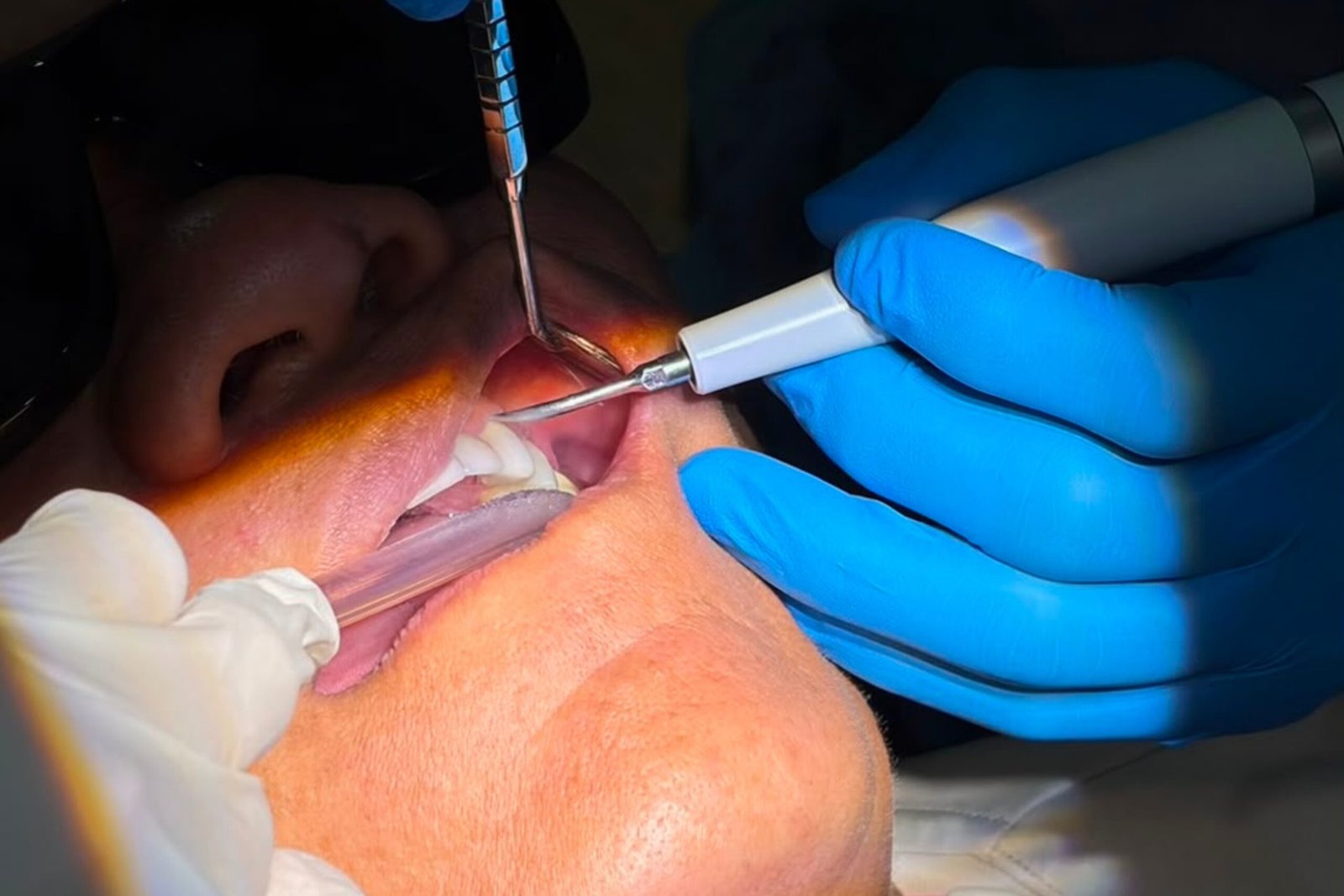
Scaling interrupts this. An ultrasonic tip vibrates deposits off the tooth while water cools the contact point and flushes debris away. Hand instruments then finish the areas that need tactile precision, particularly just beneath the gum margin. The goal is a clean root surface that the gum can reattach to.
What polishing does
Polishing uses a slowly rotating rubber cup and a mildly abrasive paste. It removes extrinsic stain — the discolouration that sits on the enamel surface from coffee, tea, teh tarik, red wine, curries and tobacco — and it leaves the enamel smoother than it was.
The smoothness is the part with a clinical benefit. Plaque adheres more readily to a rough surface, so a polished tooth stays cleaner for longer between brushings. The visible brightening is a side effect, though it is usually the part patients notice.
What polishing does not do is change the intrinsic colour of your teeth. If your teeth are naturally yellow, or have darkened with age, polishing will remove whatever stain sits on top but will not lighten the tooth itself. That requires whitening treatment, which is a different procedure entirely.
Why they are done together
Scaling leaves the tooth surface clean but slightly rough at a microscopic level, particularly where heavy deposits have been removed. Polishing immediately afterwards smooths that surface down. Doing scaling without polishing leaves a surface that plaque colonises faster than it should.
The reverse — polishing without scaling — is the more common mistake, and it is the one to watch for. It produces teeth that look and feel clean while the calculus that is actually damaging your gums remains untouched. A cleaning that takes five minutes and consists only of a rubber cup is not a scale and polish.
Worth knowing: polishing is not always appropriate. On teeth with significant enamel loss, exposed root surfaces, or heavy sensitivity, routine polishing removes a small amount of surface material each time and is better used selectively rather than across every tooth. This is a judgement call we make at the appointment.
When scaling is not enough
A routine scale and polish assumes gums that are healthy or mildly inflamed, with deposits mostly above or just below the gum line. Once pockets have deepened past four millimetres, calculus sits deep on the root surface where a standard cleaning cannot reach it properly.
At that point the correct treatment is root planing — a deeper, more methodical cleaning of the root surface, usually done quadrant by quadrant and sometimes with local anaesthesia. It is a different procedure with a different fee, and any dentist should tell you which one you need before starting rather than after.
This is why the gum assessment at the start of the appointment matters. Deciding between a scale and polish and periodontal treatment is not a formality.
What to expect afterwards
- Sensitivity for a few days is common, particularly to cold, and settles on its own. A sensitive-teeth toothpaste helps.
- Gaps that feel larger. If heavy calculus was filling the spaces between teeth, removing it exposes the real gaps. The calculus was not holding your teeth together in any useful sense.
- Gums that bleed for a few days then stop. If bleeding continues past a week, tell us.
- Stain returning. How fast depends entirely on what you drink and whether you smoke.
Booking a cleaning in Puchong
If you are unsure whether what you have been getting is a full scale and polish or just a polish, ask. It is a reasonable question and the answer should be straightforward. You can read more about what a scale and polish involves, about why regular cleanings matter, or about our general dentistry services in Puchong.
Book a scale and polish in Puchong
We check your gums first, tell you what is actually needed, and explain it before we start.
Frequently asked questions
What is the difference between scaling and polishing?
Scaling removes hardened calculus from the tooth surface and below the gum line using an ultrasonic instrument. Polishing removes surface stain and smooths the enamel with a rubber cup and paste. Scaling is therapeutic; polishing is a finishing step.
Can I have polishing without scaling?
You can, but if calculus is present it leaves the actual problem untouched. Teeth will look and feel clean while the deposits damaging your gums remain. A cleaning that consists only of a rubber cup is not a scale and polish.
Does polishing whiten teeth?
It removes surface stain from coffee, tea, red wine and smoking, so teeth often look brighter. It does not change the natural colour of the tooth itself, which requires whitening treatment.
Why do my teeth feel gappy after scaling?
Heavy calculus can fill the spaces between teeth. Once it is removed the real gaps become noticeable. The calculus was not supporting the teeth in any useful way, and the sensation usually settles within a week or two.
When is scaling not enough?
If gum pockets are deeper than about four millimetres, calculus sits too deep on the root for a routine scale and polish to reach. The correct treatment is then root planing, a deeper cleaning usually done quadrant by quadrant.

This article is for general information and does not replace an in-person dental examination. Treatment options and costs depend on your individual condition and can only be confirmed after a clinical assessment.