Surgical wisdom tooth removal in Puchong costs RM900 to RM1,500 per tooth. The procedure takes 20 to 45 minutes under local anaesthesia, swelling peaks around day two to three, and most people return to normal activity within three to five days.
Key takeaways
- Surgical removal is RM900 to RM1,500 per tooth, depending on depth and angulation.
- A panoramic X-ray is taken first to see the roots and where the nerve runs.
- You are awake but numb. You feel pressure, not pain.
- Swelling peaks at 48 to 72 hours, not on the day. That is normal, not a complication.
- The first 24 hours decide how well it heals — no rinsing, no spitting, no straws, no smoking.
Why wisdom teeth cause trouble
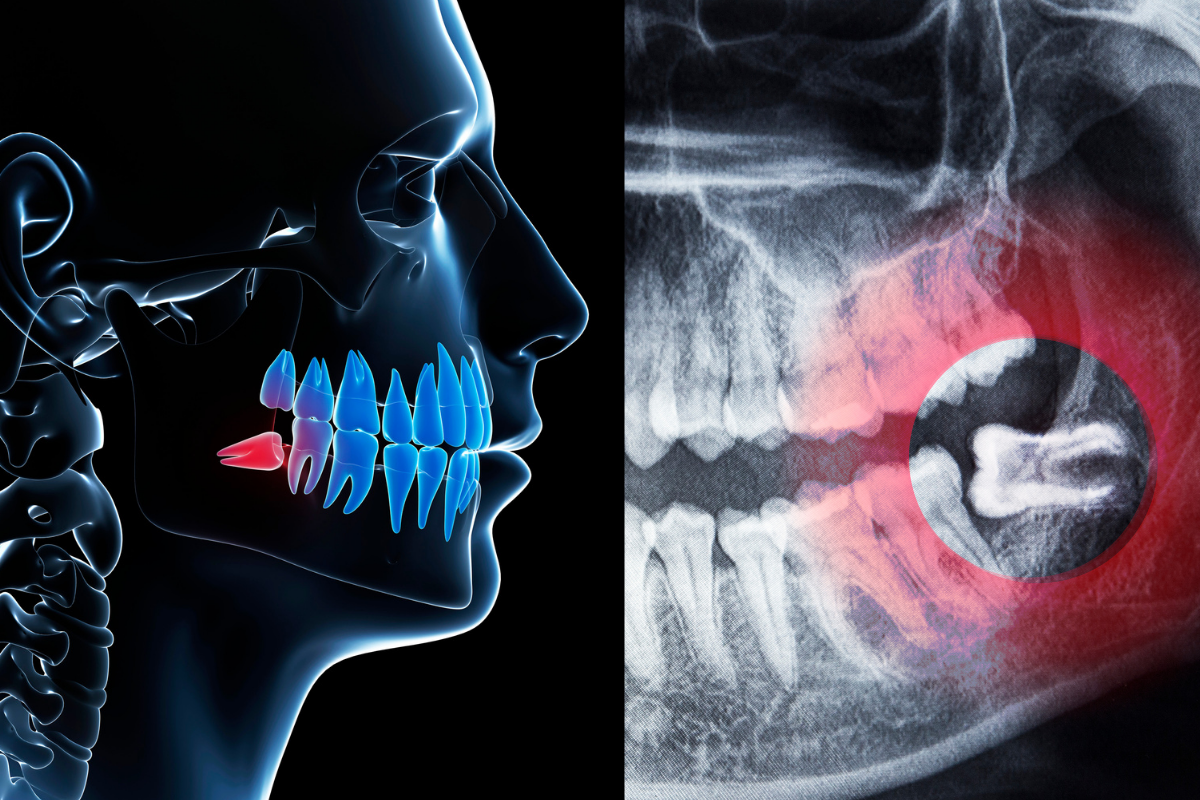
Wisdom teeth arrive between roughly 17 and 25, into a jaw that has already accommodated 28 teeth. When there is not enough room, the tooth cannot erupt into a normal position. It comes in at an angle, partially emerges, or stays trapped under the gum and bone entirely.
A partially erupted wisdom tooth is the most troublesome version. The gum flap over it creates a pocket that traps food and bacteria and cannot be cleaned, which produces recurring infection of that flap. That is the swollen, painful gum at the very back of the jaw that flares up, settles with antibiotics, and comes back a few months later.
The other common problem is silent: a wisdom tooth angled forward presses against the molar in front, and decay develops on the back surface of that molar where no toothbrush reaches. By the time it is found, a healthy second molar sometimes needs root canal treatment or extraction because of a wisdom tooth that never hurt at all.
How much it costs in Puchong
Wisdom tooth extraction at Serene Smile Dental, Puchong
| Procedure | Price | Basis |
|---|---|---|
| Wisdom tooth surgery | RM900 – RM1,500 | per tooth |
What moves a case up the range is depth, angulation, root shape and proximity to the nerve. A tooth lying horizontally under bone with curved roots takes considerably longer and more care than one that is upright and half erupted. We confirm the figure after the X-ray, before booking.
If several wisdom teeth need removing, they are often done in pairs on the same side, which means one recovery period covering two teeth rather than two separate ones.
The assessment
Nothing is booked before a panoramic X-ray. It shows the angulation of the tooth, the shape and number of roots, how much bone covers it, and — critically — how close the roots sit to the inferior alveolar nerve running through the lower jaw.
That last point is why the X-ray is not optional. Where the roots appear to overlap the nerve canal, we may recommend a CBCT scan for a three-dimensional view, or plan a modified technique. Knowing this in advance is the difference between a planned procedure and a surprise.
What happens on the day
Anaesthesia
Local anaesthesia is given and we wait until the area is completely numb — including the tongue and lip on that side for lower teeth. You will be awake throughout. You will feel firm pressure and hear noise, which is normal and not a sign that the anaesthetic is inadequate. Tell us immediately if you feel anything sharp; more anaesthetic can always be given.
Access and removal
If the tooth is under gum or bone, a small incision is made and the gum lifted. A conservative amount of bone may be removed to expose the crown. The tooth is often sectioned into pieces — this is deliberate and better, because removing three small pieces requires far less force and disturbance than levering out one large tooth.
Closing
The socket is cleaned and the gum repositioned with stitches, usually dissolvable. You bite on gauze for 30 to 45 minutes to form a clot. The whole appointment typically runs 20 to 45 minutes per tooth.
Recovery, realistically
- Day 1 — numbness wears off after two to four hours. Take the prescribed painkiller before it does, not after. Bleeding oozes rather than flows; keep gauze on.
- Days 2–3 — swelling peaks. This surprises people, who expect steady improvement. It is normal and does not mean something has gone wrong.
- Days 3–5 — swelling starts to reduce. Jaw stiffness is common and eases gradually. Most people are back at work by now, some sooner.
- Week 1–2 — the gum closes over. Dissolvable stitches disappear or are removed.
- Weeks 4–8 — bone fills the socket underneath.
Bruising along the jaw or cheek appears in some people around day three and is harmless. Written aftercare instructions are given at the appointment, and we are contactable if anything is not going as expected.
The single most important instruction: for the first 24 hours do not rinse, spit, use a straw or smoke. All four create suction or disturbance that can dislodge the blood clot forming in the socket. Losing that clot causes dry socket, which is genuinely painful and entirely preventable.
If you are anxious about it
Wisdom tooth surgery is one of the procedures people dread most, often on the basis of someone else’s story rather than their own experience. A few things genuinely help.
Tell us before the day. Knowing in advance changes how we run the appointment: more explanation before each step, a clear stop signal, and no rushing.
Ask what will happen, in order. Most of the anxiety around this procedure comes from not knowing what the noises and pressure mean. Pressure is normal; sharpness is not, and more anaesthetic can always be given.
Bring headphones. The sounds bother people more than the sensations do.
Consider having it done in the morning. A whole day spent anticipating an afternoon appointment is worse than the appointment.
If you have had a difficult experience elsewhere, say what specifically went wrong. It is usually something identifiable — inadequate anaesthesia, feeling unable to signal, or not being told what was happening — and all three are avoidable.
Having more than one removed
Where several wisdom teeth need removing, we generally do the upper and lower on the same side together. You recover one side at a time, which leaves a comfortable side to chew on, and it halves the number of recovery periods compared with doing all four separately.
All four at once is possible and sometimes sensible if you have a clear week, but eating is considerably harder with no comfortable side and the swelling is more pronounced. We will discuss which approach suits your situation and schedule.
What to arrange beforehand
- Eat a proper meal before the appointment. You will not want to chew afterwards.
- Arrange a lift if you are anxious or having more than one tooth done.
- Have soft food at home: porridge, yoghurt, soup that has cooled, scrambled egg.
- Do not book anything demanding for the following two days.
- Tell us about all medications, particularly blood thinners, and about any medical conditions.
When to call us afterwards
Contact the clinic if you have bleeding that does not settle with firm gauze pressure after an hour, pain that worsens rather than improves after day three, swelling that is still increasing after day four, fever, difficulty swallowing or opening your mouth, or numbness of the lip that persists beyond the day.
Wisdom tooth removal in Puchong
We are in Puchong South, close to Bandar Puteri, Bandar Kinrara and Puchong Jaya, with free parking. You can read more about our oral surgery services. If you are unsure whether removal is actually necessary, an X-ray and a consultation will give you a straight answer — not every wisdom tooth needs to come out.
Wisdom tooth causing trouble?
Book an assessment in Puchong. X-ray first, honest answer, and the cost confirmed before anything is booked.
Frequently asked questions
How much does wisdom tooth extraction cost in Puchong?
Surgical wisdom tooth removal is RM900 to RM1,500 per tooth at our Puchong clinic. The range reflects difficulty: depth, angulation, root shape and whether bone removal and sectioning are needed.
Does wisdom tooth extraction hurt?
The procedure is done under local anaesthesia, so you feel firm pressure and hear noise but no pain. Discomfort afterwards is managed with prescribed painkillers and peaks around day two to three.
How long does wisdom tooth extraction take?
Typically 20 to 45 minutes per tooth. A fully erupted tooth removed conventionally is at the shorter end; a deeply impacted tooth requiring bone removal and sectioning takes longer.
How long is recovery after wisdom tooth surgery?
Swelling peaks at 48 to 72 hours then reduces. Most people return to normal activity within three to five days. The gum closes over within one to two weeks and bone fills the socket over four to eight weeks.
Why do I need an X-ray before wisdom tooth removal?
A panoramic X-ray shows the angulation, root shape, bone coverage and how close the roots sit to the nerve running through the lower jaw. This determines the technique and whether any additional imaging is needed.
What should I avoid after wisdom tooth extraction?
For the first 24 hours do not rinse, spit, use a straw or smoke. All four create suction that can dislodge the blood clot in the socket, which causes dry socket. Avoid hot food and strenuous exercise on the first day.

This article is for general information and does not replace an in-person dental examination. Treatment options and costs depend on your individual condition and can only be confirmed after a clinical assessment.