Receding gums do not grow back on their own. Recession has several causes — aggressive brushing, gum disease, grinding, thin gum tissue and orthodontic movement — and treatment starts with identifying which one applies, because stopping the cause is what prevents further loss.
What recession actually is
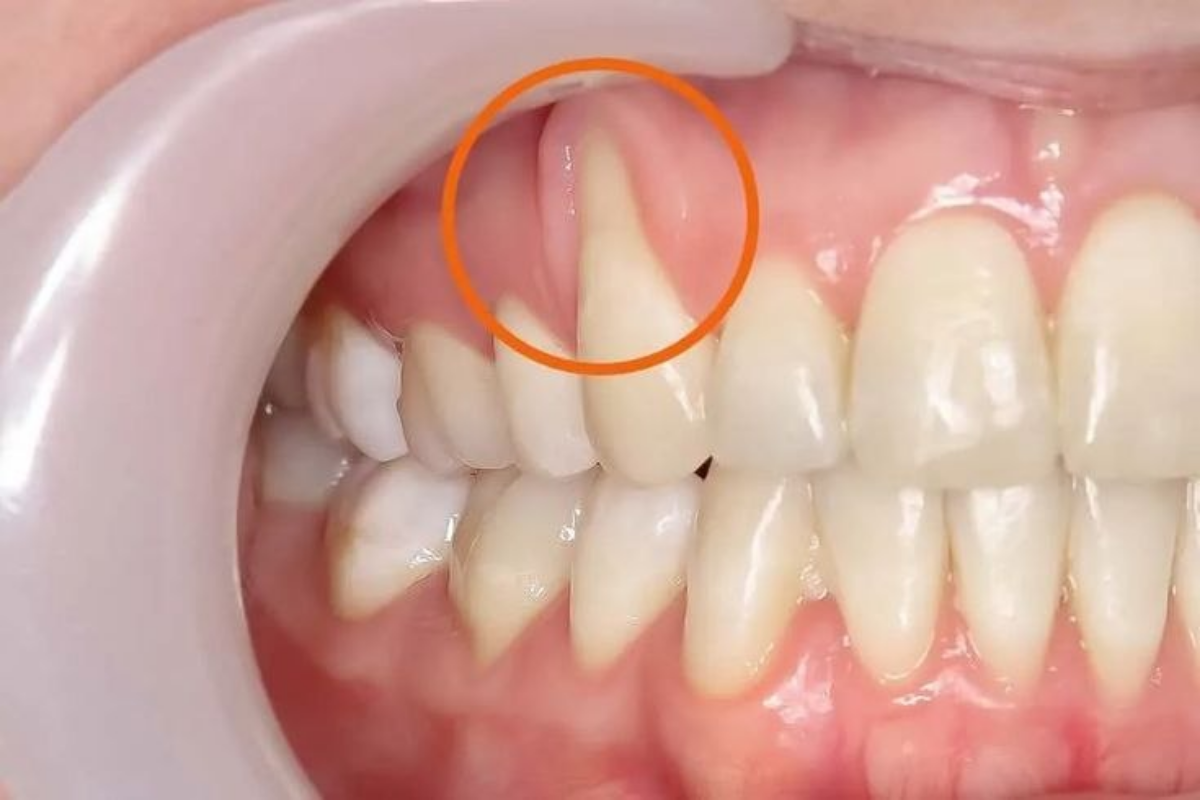
Gum recession means the gum margin has moved down the tooth, exposing root surface that was previously covered. Teeth look longer, and a distinct step or notch is often visible where enamel ends and root begins.
The important thing about exposed root is that it is not enamel. Root surface is covered by cementum, which is thinner, softer, and considerably more vulnerable — to abrasion, to acid, and to decay. It also has no insulating enamel layer, which is why exposed roots are so often sensitive.
Recession is extremely common, particularly after forty, and mild recession with no other findings may need nothing more than monitoring. What matters is knowing why it happened and whether it is still progressing.
The causes, and why identifying yours matters
Brushing too hard, or with the wrong technique
A leading cause, and the one most people are surprised by. Scrubbing horizontally with a medium or hard brush wears both gum and tooth. The signature is a smooth, wedge-shaped notch at the gum line and recession that is worse on the side you brush more forcefully — usually the left in right-handed people.
Periodontal disease
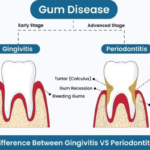
Where bone is lost to periodontitis, the gum follows it down. This version of recession comes with the other findings of gum disease: pockets deeper than 4 mm, bleeding on probing, bone loss on X-ray. Distinguishing it from brushing-related recession matters enormously, because the treatment is entirely different. Our guide to gum disease covers this.
Thin gum tissue
Some people are born with a thin gingival biotype — delicate tissue with little bone covering the root beneath. It recedes more readily under normal forces, and there is a strong familial pattern.
Grinding and clenching
Heavy occlusal forces do not directly cause recession, but they accelerate it where tissue is already thin or bone already compromised.
Orthodontic movement
Teeth moved outside the envelope of bone can end up with very little bone on the outer surface, and gum recedes over the thin area. This is a recognised consequence of moving teeth too far or too fast.
Other causes
- Lip or tongue piercings, which rub repeatedly against a specific area of gum. The recession is highly localised and often severe.
- Smoking, which impairs gum blood supply and healing.
- A prominent tooth root sitting outside the arch with minimal bone over it.
- A high frenum attachment pulling on the gum margin.
- Poorly fitting restorations that irritate the margin chronically.
Why it matters beyond appearance
- Sensitivity. Exposed dentine transmits cold and sweet directly. This is the most common complaint and our guide to managing tooth sensitivity covers the options.
- Root decay. Root surface decays faster and at a higher pH than enamel does. Recession substantially raises decay risk in that area.
- Progressive notching. Once a notch forms, it collects plaque and continues to deepen.
- Appearance, particularly on upper front teeth.
- Structural weakness where notches become deep enough to compromise the tooth.
Can receding gums grow back?
Not spontaneously, and this is worth being direct about because a great deal of marketing suggests otherwise. No toothpaste, oil, mouthwash or supplement regrows gum tissue over an exposed root. Gum tissue does not regenerate over a root surface without surgical intervention.
What can and does happen is that recession stops progressing once the cause is removed. That is the realistic goal in the majority of cases, and for mild recession it is entirely sufficient.
A useful distinction: gum swollen by inflammation can appear to “come back” after treatment, but that is swelling resolving, not attachment regenerating. True coverage of an exposed root requires a graft. Anything else that claims to reverse recession is describing the reduction of inflammation.
Treatment options
Stop the cause — always first
Soft brush, no scrubbing, angled into the gum line rather than dragged across it. Treat active gum disease. A night guard if you grind. Removal of a piercing that is causing localised damage. Without this step, everything else is temporary.
Manage the sensitivity
Desensitising toothpaste used consistently, fluoride varnish applied at appointments, and in some cases a bonded coating over the exposed area. Most sensitivity from recession is manageable without surgery.
Restore the notch
Where a wedge-shaped notch has formed, a tooth-coloured composite filling restores the contour, reduces sensitivity and stops the notch deepening. A same-appointment solution for most cases.
Gum grafting
Where recession is severe, progressing despite the cause being controlled, or cosmetically significant on a visible tooth, a graft can cover the root. Tissue is taken from the palate or a donor source and secured over the exposed area. It is a surgical procedure with a proper healing period, and it is reserved for cases that genuinely warrant it rather than offered routinely.
Monitoring rather than treating
Plenty of recession needs no treatment at all. Where it is mild, stable, not sensitive and not cosmetically troubling, the right approach is measuring it and re-measuring at future visits.
Recession is recorded in millimetres from the enamel junction alongside the six-point pocket chart, which means a genuine baseline exists. Two millimetres now and two millimetres in three years means it is stable. Two becoming four means the cause is still active and needs addressing.
Prevention
- Soft-bristled brush only. Medium and hard brushes offer no cleaning advantage and cause harm.
- Angle bristles at 45 degrees into the gum line and use small circular movements. Do not saw across.
- An electric brush with a pressure sensor is genuinely useful if you brush firmly by habit.
- Treat gum disease early, while it is still gingivitis.
- Wear a night guard if you grind.
- Have recession measured, not just noticed.
Getting recession assessed in Puchong
If your teeth look longer than they used to, or exposed root has become sensitive, the useful first step is finding out which cause applies to you. We are in Puchong South, near Bandar Puteri, Bandar Kinrara and Puchong Jaya. More about our gum treatment services.
Gums receding?
Book an assessment in Puchong. We will identify the cause, measure it properly, and tell you whether it needs treating or monitoring.
Frequently asked questions
Can receding gums grow back?
Not spontaneously. No toothpaste, oil, mouthwash or supplement regrows gum tissue over an exposed root. Covering an exposed root requires a surgical graft. What can be achieved without surgery is stopping the recession progressing.
What causes receding gums?
Aggressive brushing technique, periodontal disease, naturally thin gum tissue, grinding, orthodontic movement, lip or tongue piercings, smoking, and prominent roots with little bone covering them.
Is receding gums the same as gum disease?
No. Recession from periodontal disease comes with pockets deeper than 4mm, bleeding on probing and bone loss on X-ray. Recession from aggressive brushing occurs with healthy pocket depths. The treatments are entirely different.
Why are my receding gums sensitive?
Exposed root surface is covered by cementum rather than enamel. It is thinner, softer and has no insulating layer, so cold and sweet stimuli reach the nerve far more directly.
How is gum recession treated?
First by stopping the cause: softer brushing, treating gum disease, a night guard for grinding. Then by managing sensitivity with desensitising toothpaste or fluoride, restoring notches with composite, and grafting where recession is severe or progressing.
Does all gum recession need treatment?
No. Mild, stable recession that is not sensitive or cosmetically troubling can simply be measured and re-measured at future visits to confirm it is not progressing.

This article is for general information and does not replace an in-person dental examination. Treatment options and costs depend on your individual condition and can only be confirmed after a clinical assessment.