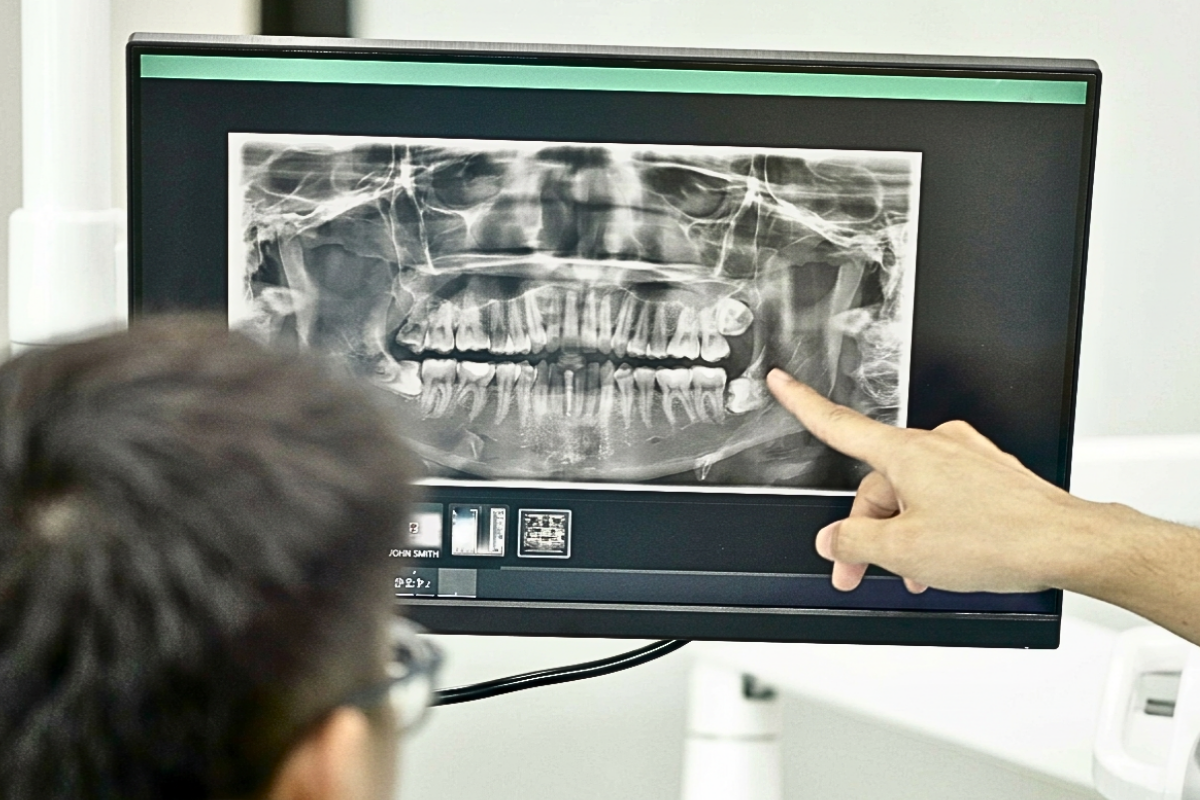
No. Wisdom teeth that are healthy, fully erupted, functional and cleanable should be kept. Removal is indicated when there is recurring infection, decay in the tooth or the molar in front, a cyst, damage to the neighbouring tooth, or when the tooth cannot be cleaned.
The routine-removal era is over
For decades, wisdom teeth were removed almost automatically in the late teens, whether or not they were causing problems. The reasoning was preventive: get them out before they cause trouble, while healing is easy.
That position has shifted. Major clinical guidance now advises against removing symptom-free, disease-free wisdom teeth, because the surgery carries its own small risks and most retained wisdom teeth never cause a problem. The current standard is assessment and monitoring, not routine extraction.
Which means the honest answer to “do I really need mine out” is: it depends entirely on what yours are doing, and that requires an X-ray rather than an opinion.
When removal is genuinely indicated
- Recurring pericoronitis. Repeated infection of the gum flap over a partly erupted tooth. Two or more episodes generally means the flap is not going to stop causing trouble.
- Decay in the wisdom tooth that cannot be restored, or which would be difficult to restore reliably given the access.
- Decay on the molar in front. A forward-angled wisdom tooth creates an uncleanable contact point, and the second molar decays on its back surface. This is the most common reason to remove a wisdom tooth that has never hurt.
- Root resorption of the neighbouring molar, where the wisdom tooth is pressing into it.
- A cyst or other pathology associated with the tooth.
- Gum disease localised around the wisdom tooth that cannot be controlled.
- Orthodontic or surgical planning that specifically requires the space.
- The tooth cannot be cleaned and is repeatedly the source of problems.
When it is reasonable to keep them
- Fully erupted, upright, and biting against the opposing wisdom tooth.
- You can reach it with a toothbrush and floss it properly.
- No decay, in it or the tooth in front.
- Healthy gum around it with no pocketing.
- Fully buried in bone, symptom-free, with no cyst and no effect on the neighbouring root.
A functional wisdom tooth is a real tooth. It chews. It can act as a bridge abutment later. If a molar in front is ever lost, an upright wisdom tooth is occasionally worth having. Removing one that is doing its job is not conservative dentistry.
The arguments that do not hold up
“They will push your front teeth crooked”
This is the most repeated claim and the least supported. Lower front teeth crowd with age in people who never developed wisdom teeth at all, and in people whose wisdom teeth were removed years earlier. Late lower crowding appears to be a general maturational change rather than something wisdom teeth cause. Removing them purely to prevent it is not justified by the evidence.
“Take them out now while you are young”
There is a real kernel here — surgery and healing genuinely are easier at 20 than at 45, because roots are less developed and bone is more elastic. But easier surgery is not a reason to have surgery. It is a reason to act promptly if there is an indication.
“Everyone has to have them out eventually”
Plainly untrue. A substantial proportion of people keep some or all of their wisdom teeth for life without incident, and some never develop them at all.
A fair question to ask any dentist: “What specifically is this tooth doing, or likely to do, that justifies removing it?” A good answer names something concrete — a decay lesion, a pocket depth, a radiographic finding. “It might cause problems later” is not, by itself, a clinical indication.
Monitoring instead of removing
If your wisdom teeth are symptom-free but not ideally positioned, the reasonable course is active monitoring: a check at your routine examinations, and a periodic X-ray to look for decay on the neighbouring molar, changes in the surrounding bone, or a developing cyst.
This is not passivity — it is watching for the specific things that would change the decision. If any of them appear, removal becomes indicated and is done then, with a clear reason.
The risks worth weighing
Removing a lower wisdom tooth carries a small risk of temporary or, rarely, permanent altered sensation in the lip and chin, because of how close the roots can sit to the nerve. Upper wisdom teeth sit near the sinus. There is also the ordinary recovery period, and a few per cent chance of dry socket.
These risks are small and manageable, and they are entirely worth accepting when there is a genuine indication. They are not worth accepting for a tooth that is causing nothing. That is the whole argument in one sentence.
Getting a straight answer in Puchong
A panoramic X-ray and a consultation will tell you what your wisdom teeth are actually doing, and we are equally willing to tell you they should be left alone. If removal is indicated, our wisdom tooth extraction guide covers cost and recovery, and our guide to impacted wisdom teeth covers the warning signs.
Want to know if yours need to come out?
Book an assessment in Puchong. X-ray, honest answer, and no pressure either way.
Frequently asked questions
Do I really need my wisdom teeth removed?
Not if they are healthy, fully erupted, functional and cleanable. Current clinical guidance advises against removing symptom-free, disease-free wisdom teeth. Removal is indicated when there is infection, decay, a cyst, or damage to the neighbouring tooth.
When should wisdom teeth be removed?
For recurring pericoronitis, unrestorable decay in the tooth, decay on the molar in front, root resorption of the neighbouring tooth, a cyst, uncontrollable localised gum disease, or when the tooth simply cannot be cleaned.
Do wisdom teeth push front teeth crooked?
The evidence does not support this. Lower front teeth crowd with age in people who never developed wisdom teeth and in people whose wisdom teeth were removed years earlier. Late crowding appears to be a general maturational change.
Is it better to remove wisdom teeth while young?
Surgery and healing are genuinely easier in the late teens and early twenties. But that is a reason to act promptly if there is an indication, not a reason to remove a healthy, symptom-free tooth.
What are the risks of wisdom tooth removal?
Lower wisdom teeth carry a small risk of temporary or rarely permanent altered sensation in the lip and chin, because of the nearby nerve. Upper wisdom teeth sit near the sinus. There is also a few per cent chance of dry socket.
Can wisdom teeth be monitored instead of removed?
Yes. Symptom-free wisdom teeth can be checked at routine examinations with periodic X-rays looking for decay on the neighbouring molar, bone changes or a developing cyst. Removal is done if any of those appear.

This article is for general information and does not replace an in-person dental examination. Treatment options and costs depend on your individual condition and can only be confirmed after a clinical assessment.