Recovery from wisdom tooth surgery follows a predictable pattern: bleeding and numbness on day one, swelling peaking at day two to three, steady improvement from day four, and most people back to normal by day five to seven. The gum closes within two weeks.
Before you read the timeline
The single thing that surprises people most is that day two and day three feel worse than day one. That is not a sign something has gone wrong — it is the normal inflammatory response reaching its peak. Knowing that in advance saves a great deal of unnecessary worry.
Day 1: the day of surgery
First few hours
Bite firmly on the gauze for 30 to 45 minutes without checking it. Peeking every few minutes disturbs the clot that is forming. Replace it once if oozing continues, then leave it out.
The numbness lasts two to four hours. Take the prescribed painkiller before it wears off, not after — staying ahead of the pain is far more effective than chasing it. While numb, be careful not to bite your lip or cheek, which is a common and avoidable injury.
Rest of the day
- Rest with your head elevated. Do not lie flat.
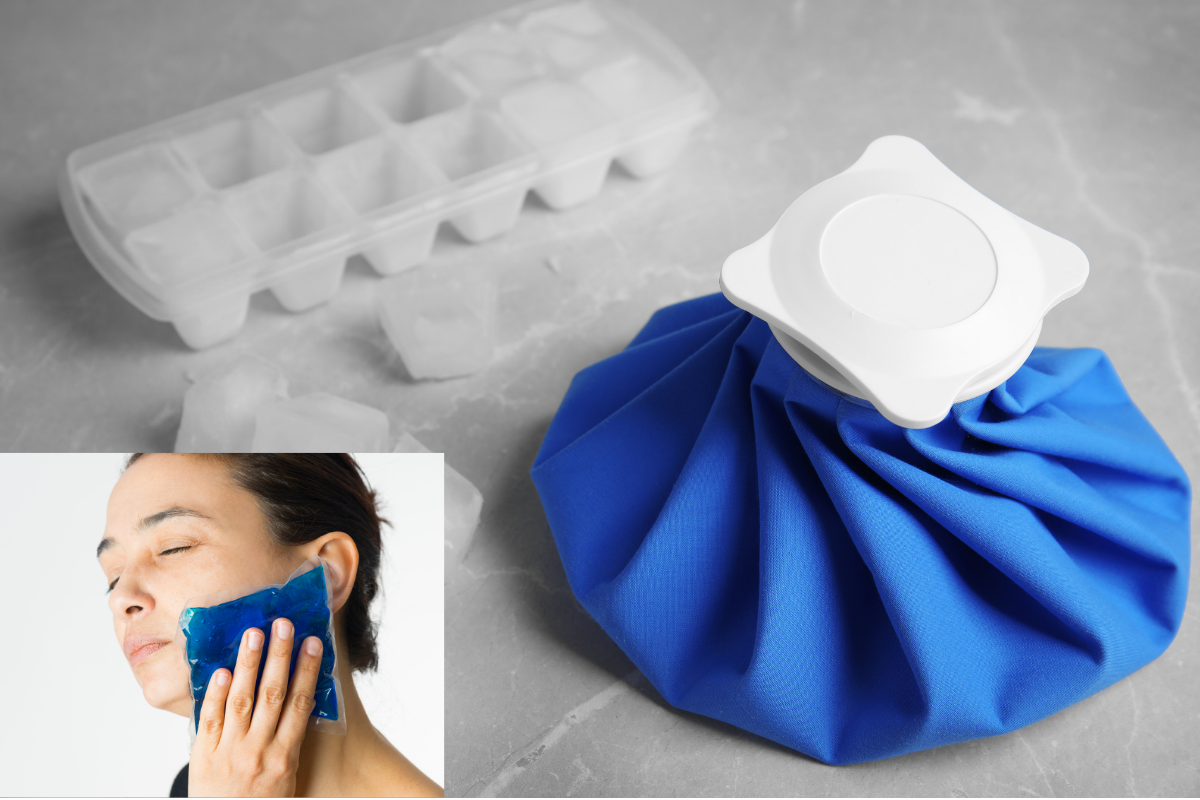
- Ice pack on the cheek, 15 minutes on and 15 off, for the first several hours.
- Cool soft food and plenty of fluids from a cup.
- No rinsing, spitting, straws or smoking. All four dislodge the clot.
- No exercise, no alcohol, no hot drinks.
Oozing that tints your saliva pink for several hours is normal. Steady bleeding that fills your mouth is not — apply firm gauze pressure for a full hour, and call us if it continues.
Days 2–3: the peak
Swelling reaches its maximum between 48 and 72 hours. Your cheek may be visibly puffy, and jaw stiffness makes opening your mouth difficult. Some people develop bruising along the jaw or down the neck, which looks alarming and is harmless.
- Switch from ice to warm compresses from day two — heat now helps disperse the swelling that cold helped limit.
- Begin gentle warm salt water rinses after meals. Let the water fall out of your mouth rather than spitting.
- Continue soft food. Chewing is uncomfortable and unnecessary.
- Keep brushing your other teeth normally, avoiding the surgical site.
If the surgery was straightforward, this is often the point where people realise they are more restricted than they are in pain.
Days 4–5: the turn
Swelling starts to reduce and jaw opening improves. Most people are comfortable enough to stop the stronger painkillers and manage with ordinary ones, or need none at all.
This is also the window where dry socket, if it is going to happen, becomes apparent. Pain that worsens at this stage rather than improving, radiating towards the ear and barely responding to painkillers, is the signature. Our guide to dry socket covers what to look for and why treatment takes minutes.
Most people return to work or classes around day three to five. If your job is physical, allow longer.
Week 1–2: closing over
The gum tissue closes across the socket. Dissolvable stitches break down over one to two weeks; where non-dissolvable stitches were placed, they are removed at a review appointment.
You can return to normal brushing near the site by the end of week one, gently. Food packing into the socket is common at this stage and irritating rather than harmful — a gentle rinse after eating clears it. Do not use anything sharp to dig it out.
Exercise can resume around day five to seven for most people, building up rather than going straight back to full intensity.
Weeks 3–8: underneath
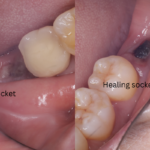
The visible healing is finished, but bone is still filling the socket beneath the gum. This is silent and requires nothing from you. A slight dimple in the gum may persist for some weeks and gradually levels out.
If several teeth were removed at once: the timeline is the same but the intensity is higher, and eating is harder because there is no comfortable side to chew on. Plan for an extra day or two of proper rest rather than assuming you will manage as though it were a single tooth.
What to eat, in order
- Days 1–2: cool or lukewarm liquids and purées. Yoghurt, cooled soup, smoothies from a cup, porridge, mashed potato.
- Days 3–5: soft solids. Scrambled egg, steamed fish, well-cooked noodles, soft tofu, banana.
- Day 5 onwards: gradually back to normal, still chewing away from the site.
- Avoid throughout: nuts, seeds, crisps, rice grains and anything crunchy that lodges in the socket. Avoid very hot food for the first two days.
When to call us
Contact the clinic if you have bleeding that does not settle with an hour of firm gauze pressure, pain that increases after day three, swelling still increasing after day four, fever, difficulty swallowing or breathing, pus or a foul discharge, or lip or chin numbness that persists beyond the day of surgery.
None of these are common, and all are better raised early than waited out.
Recovering well in Puchong
We give written aftercare instructions and are available if anything is not going as expected. More about the procedure itself in our wisdom tooth extraction guide, and about our oral surgery services.
Recovery not going as expected?
Call the clinic. It is always better to ask than to wait and see.
Frequently asked questions
How long does it take to recover from wisdom tooth surgery?
Swelling peaks at 48 to 72 hours then reduces. Most people return to normal activity within three to five days. The gum closes over within one to two weeks and bone fills the socket over the following four to eight weeks.
Why is day two worse than day one?
Swelling from the normal inflammatory response peaks between 48 and 72 hours after surgery. It is expected rather than a sign of a problem, and it starts reducing from around day four.
When can I go back to work after wisdom tooth removal?
Most people return around day three to five. Allow longer if your job is physically demanding or if several teeth were removed at once.
What can I eat after wisdom tooth surgery?
Cool liquids and purees for the first two days, soft solids from day three, and gradually back to normal from day five. Avoid nuts, seeds, crisps and rice grains that can lodge in the socket, and avoid very hot food for the first two days.
When can I start rinsing my mouth?
Not for the first 24 hours, because rinsing can dislodge the clot. From day two, rinse gently with warm salt water after meals and let the water fall out rather than spitting.
When should I call the dentist after wisdom tooth surgery?
If bleeding does not settle after an hour of firm gauze pressure, pain increases after day three, swelling is still increasing after day four, or you develop fever, difficulty swallowing, pus, or lip numbness persisting beyond the day of surgery.

This article is for general information and does not replace an in-person dental examination. Treatment options and costs depend on your individual condition and can only be confirmed after a clinical assessment.